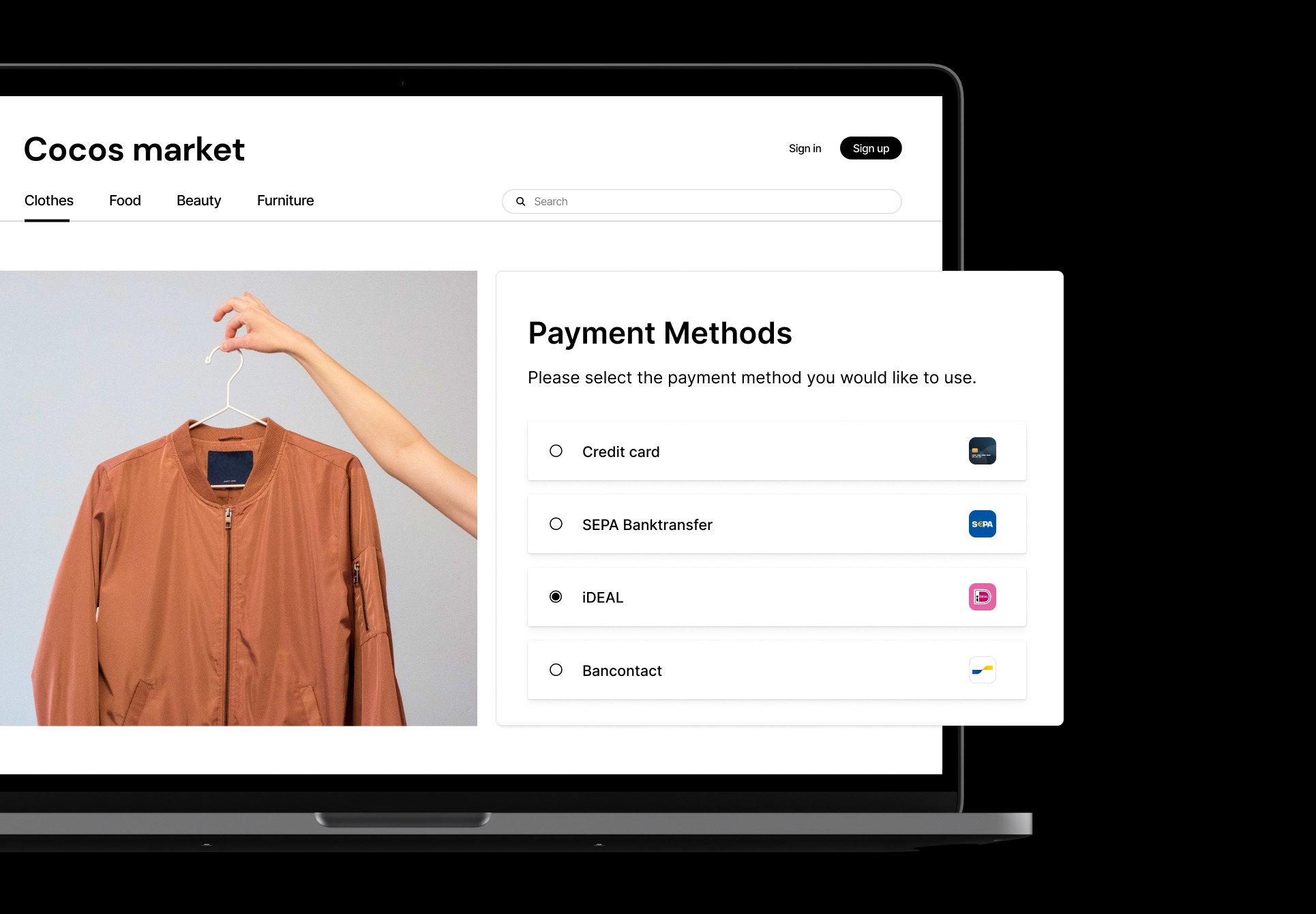
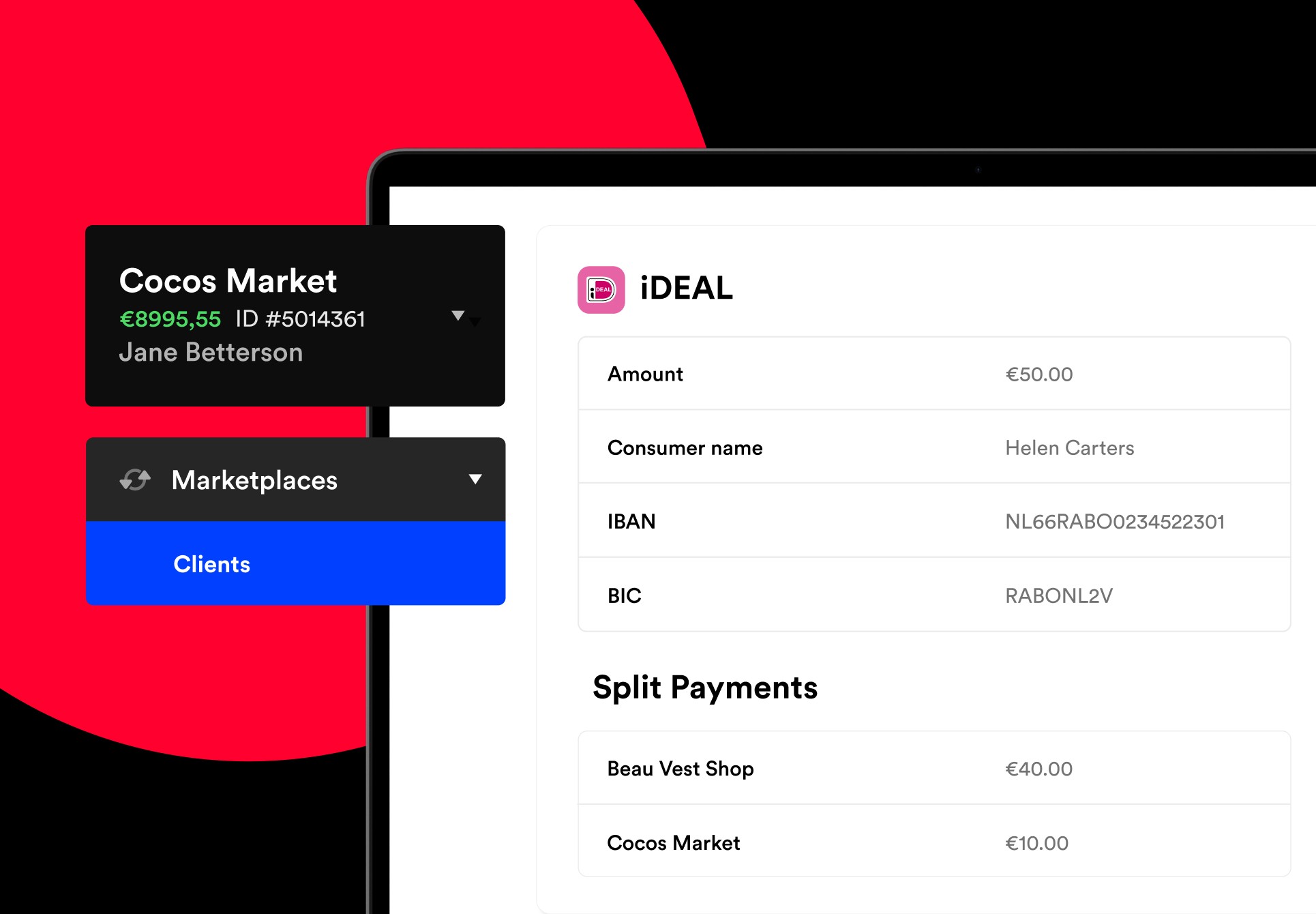
If you’re running a multi-vendor marketplace, you will have multiple sellers. That means shoppers on your marketplace might want to purchase goods or services from various vendors, creating a basket of products from different sellers. After they pay, you have to distribute the funds to the sellers and take your commission if required.
This is where multi-split payments can help. If you work with a PSP, they should take the total amount from the consumer and split it between each seller and your business. You can see how this works in the image below.

Advanced PSPs also offer features that help provide a clear overview of payments made to you and your sellers, which can also be vital when managing refunds and payouts.
What is a marketplace payment provider?
A marketplace payment provider is a service that handles the financial transactions between buyers and sellers on an online marketplace. The PSP ensures secure payment processing, often offering multiple payment methods such as credit cards, digital wallets, and local payment options.
In addition to facilitating payments, they handle compliance, fraud protection, and settlement, making transactions smoother for both buyers and sellers. Marketplaces can either choose to manage payments internally or partner with an external PSP which can simplify integration and offer additional features such as multi-vendor payment splitting and reporting tools.
How to integrate marketplace payments into your marketplace
If you're using a content management system (CMS) like Shopify, WordPress or others, integrating marketplace payments can be made simple with a plugin. Providers like Mollie offer easy-to-use plugins that seamlessly integrate with your existing platform, enabling you to manage payments effortlessly.
These plugins simplify the setup process by automating key tasks, such as payment gateway connections, fraud protection, and multi-vendor payment splitting. By using a plugin, you can focus on growing your marketplace while the payment system takes care of the technical complexities.
How to pick the right marketplace payment service provider
Choosing the right (PSP) for your marketplace is crucial to ensure smooth transactions, security, and scalability. It’s important to evaluate providers based on the features they offer, how well they integrate with your platform, and whether they can grow with your business. When selecting a PSP, consider both the immediate needs of your marketplace and its future expansion. A well-chosen PSP can streamline payments, improve the customer experience, and help manage multiple vendors efficiently.
Key Considerations:
Market expertise
Ensure the PSP has experience in your specific market or industry. This expertise can help with regulatory compliance, local payment methods, and offering tailored solutions for your needs.
Payment methods offered
Choose a PSP that supports the payment methods your sellers and customers prefer. A wide variety of options, including cards, e-wallets, and local payment methods, will increase convenience and conversion rates.
Scalability
As your marketplace grows, so will your payment processing needs. Select a PSP that can scale with your business, handling increased volume and expanding into new markets smoothly.
Transparent pricing
Look for clear, upfront pricing with no hidden fees. A transparent pricing structure ensures that you can budget effectively and avoid unexpected costs.
Examples of marketplace PSPs
When selecting a PSP, it’s important to consider the various options available that can cater to the specific needs of your platform. PSPs like Adyen, Stripe, Mollie, and Worldpay offer complete solutions, supporting global transactions, multi-currency payments, and fraud prevention tools. However, partnering with the right PSP depends on factors such as ease of integration, local market support, and advanced features.
Adyen
Adyen offers a comprehensive payment solution for marketplaces, including support for a wide range of payment methods and currencies. Their platform provides features like multi-split payments, fraud detection, and data insights. Adyen is an excellent option for businesses operating at a global scale, but it may be more suited to larger businesses due to its complex pricing and setup.
Stripe
Stripe is known for its simple integration and strong developer tools, making it an attractive choice for smaller and tech-savvy marketplaces. They offer robust APIs for customisation, multi-vendor support, and strong fraud prevention. However, Stripe’s pricing can become expensive as transaction volumes grow, so it's essential to evaluate your long-term needs.
Worldpay
Worldpay is another established PSP that supports a wide range of payment methods, offering both in-person and online payment solutions. It’s known for its reliability and scalability, but its service fees can be on the higher end. Worldpay also provides fraud protection tools, making it a secure option for international transactions.
Mollie
Mollie stands out by offering easy integration with popular platforms like Shopify and WordPress, helping small to medium-sized marketplaces get up and running quickly. Mollie provides localised payment methods and clear, transparent pricing, making it ideal for businesses that need flexibility, scalability, and simplicity. Additionally, Mollie’s customer support team can assist with integrating payments and managing your marketplace with ease.
By comparing these providers and understanding their features, you can select the one that best aligns with your marketplace’s goals, ensuring smooth transactions and satisfied customers.