When you process card transactions through Mollie, debit and credit card payments are always screened for fraud. Standard protection is always included.
With Acceptance & Risk, you can go a step further:
The 'Acceptance' part is all about increasing the conversion of card payments, preventing anti-fraud measures - such as 3D Secure and fraud screening - from hampering your conversion. By altering your settings you can decide to take more risk in the pursuit of higher conversion rates.
The 'Risk' part focuses on building in protection tailored to your business to ensure you don't suffer losses due to fraud.
The tool works on two levels: transaction level on the one hand, and strategic level on the other:
Transaction level
Card transaction screening aims to distinguish legitimate transactions from fraudulent ones. With A&R, each payment is assigned a score between 0 (no risk detected) and 100 (highest risk). Mollie blocks all transactions above a certain threshold - unless you have customised your settings with A&R.
In the transaction overview in your Mollie Dashboard, card payments with an unacceptable fraud risk are labelled 'blocked'. The transaction details offer insights into why that particular transaction has been blocked, for example because the payment originates from a country with an increased risk of fraud.
Please note that A&R fraud screening is not available for card payments made through wallets such as Apple Pay and/or recurring payments, e.g. for subscriptions (after the first payment has been processed).
Strategic level
With A&R, Mollie allows businesses to define and fine-tune their own card payment risk appetite: by creating lists, tailoring risk controls to your own needs and statistics that map the performance of your payments.
Lists: you decide who makes transactions with your business
With A&R, you can create trust lists and block lists to set exceptions when accepting card payments. You can do this based on parameters such as the card number, the consumer's e-mail address, the country where the card was issued or the country where the IP address is located.
If the payment details match the parameters in your lists, the payment is automatically blocked (block list) or it goes to the next stage in payment processing, even if the risk score is higher than the default (trust list).
You decide whether or not to accept payments from a certain country or made with a certain credit card number.
💡 Read more: How do I use the Block list and Trust list?
Risk controls: tailored to the needs of your business.
When it comes to risk controls, you are also in the driver's seat: you decide how much risk you are willing to take, depending on the situation your business is in. In the Mollie Dashboard, you can manage 2 groups of risk controls:
3D Secure authentication: 3D Secure authentication (3DS) is an excellent way to protect your business against consumer fraud, but it often causes friction by adding two-step verification during the checkout process. With A&R, you get the choice of always performing 3DS screening for card transactions or applying it in a dynamic way (Dynamic 3D Secure). In the latter case, Mollie requests the issuing bank to skip two-step verification, avoiding unnecessary friction for the consumer at checkout. This will have a positive effect on your conversion rate.
Fraud checks: You can choose to accept elevated risk payments if you believe our standard screening blocks legitimate payments. If you deviate from the standard, our tool immediately gives you an estimate of the potential business impact.
💡 Read more: How do I manage my risk controls?
Statistics and metrics: fine-tune your strategy based on insights
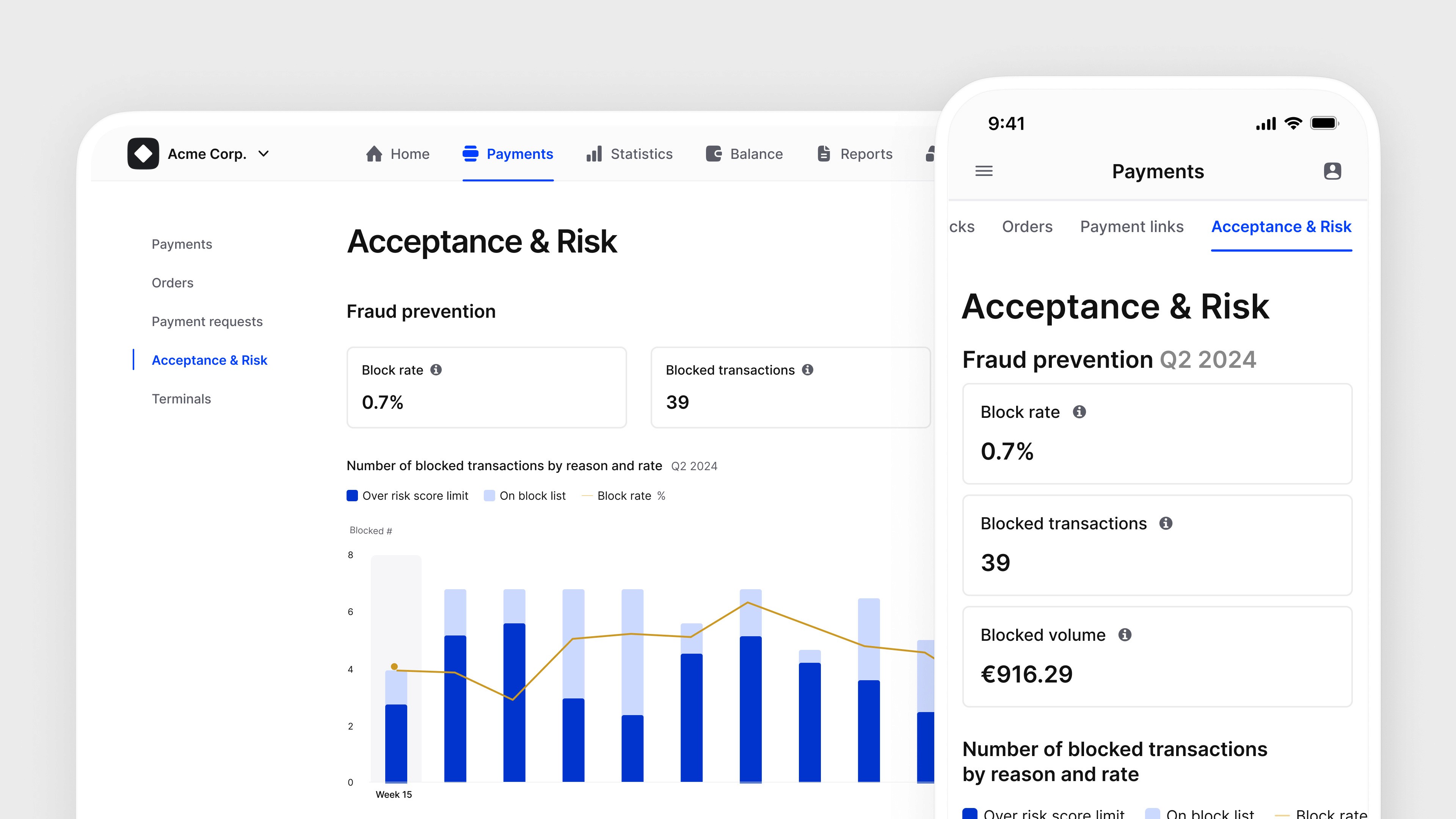
Through the overview menu in your Mollie Dashboard, you can access statistics and charts that give you insights into the performance of your card payments. Based on these, you can further fine-tune and optimise your fraud strategy.
💡 Read more: How can I understand my card performance?