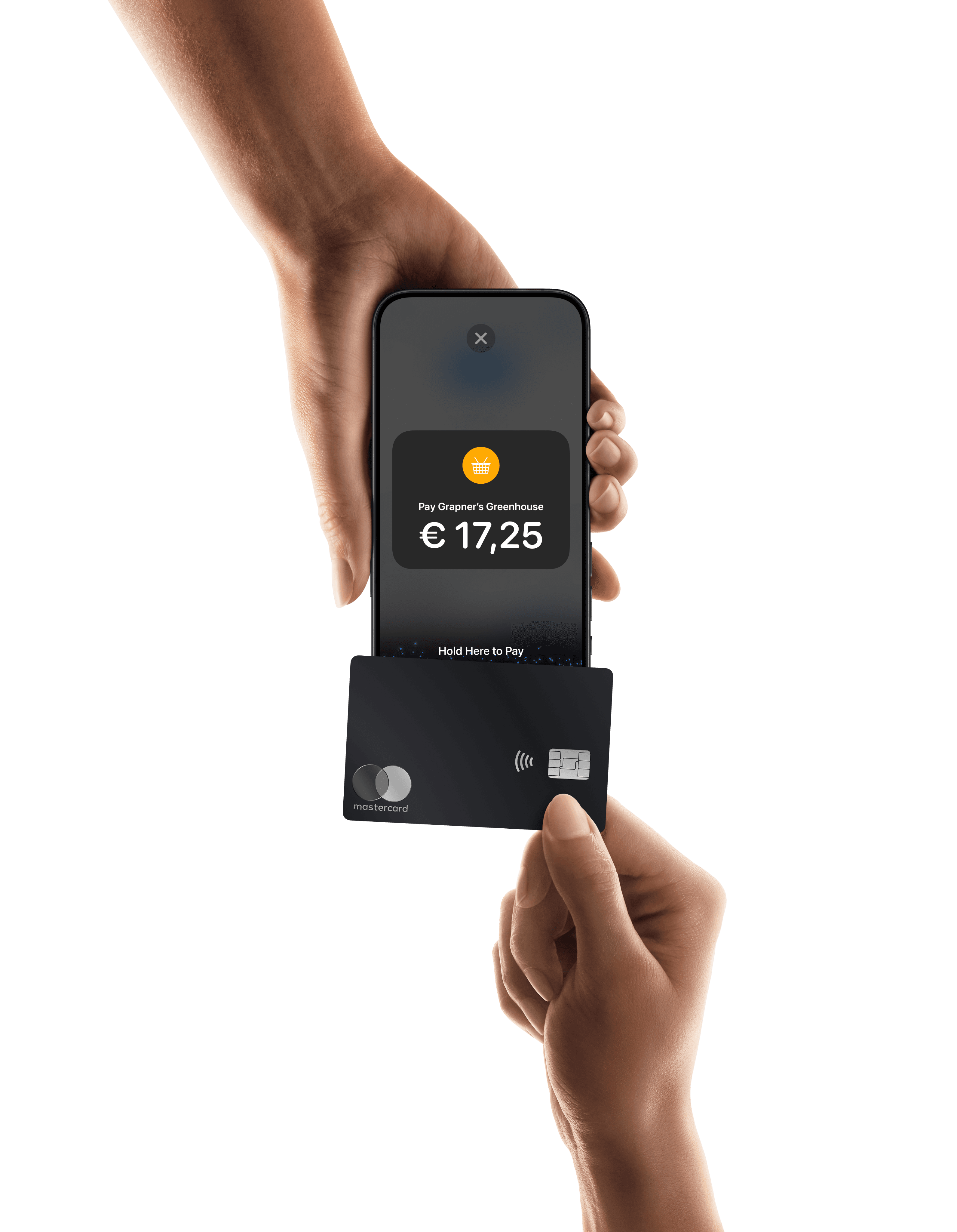
Tap to Pay on iPhone
Accept contactless payments right on your iPhone with the Mollie app
Accept payments
Technical resources
About Mollie
Tap to Pay on iPhone
Accept contactless payments right on your iPhone with the Mollie app
Accept payments
Technical resources
About Mollie
How Payt and Mollie automated the unmatchable bank transfers
How a Dutch SaaS platform used Mollie’s Virtual IBANs and reconciliation features to eliminate payment bounces, achieve 99.8% automated reconciliation, and help clinics get paid faster.
How a Dutch SaaS platform used Mollie’s Virtual IBANs and reconciliation features to eliminate payment bounces, achieve 99.8% automated reconciliation, and help clinics get paid faster.
MaaS
Partner: SaaS
+99%
+99%
+99%
of payments automatically reconciled
“It saves our customers a massive amount of time, but it also saves ‘mind space.’ That’s probably the most important win: keeping the process in a happy flow so things don’t go wrong in the first place.”
Jelger Gustafsson, Founder, Payt
Unmatched bank transfers cost healthcare clinics hours of manual admin. By integrating Mollie’s virtual IBANs, SaaS platform Payt has completely automated the reconciliation process: filtering out unrelated transaction noise so clinics can stop chasing invoices and get back to patient care. While this use case focuses on dental clinics, the same infrastructure is designed to support a much broader rollout across sectors.
“It saves our customers a massive amount of time, but it also saves ‘mind space.’ That’s probably the most important win: keeping the process in a happy flow so things don’t go wrong in the first place.” – Jelger Gustafsson, Founder, Payt
About Payt
Founded in 2013 and headquartered in Groningen, Payt is a SaaS platform built to streamline the order-to-cash cycle. For healthcare providers like dental clinics, Payt’s software handles the heavy lifting of invoicing, reminders, and payment collection – acting as a helpful layer between the clinic and its patients.

For Payt co-founder Jelger Gustafsson, the mission is straightforward: make daily operations effortless, keep customers happy.
It’s a pragmatic strategy that works, reflected in Payt’s high Net Promoter Scores and consistently low churn.
Unmatched bank transfers cost healthcare clinics hours of manual admin. By integrating Mollie’s virtual IBANs, SaaS platform Payt has completely automated the reconciliation process: filtering out unrelated transaction noise so clinics can stop chasing invoices and get back to patient care. While this use case focuses on dental clinics, the same infrastructure is designed to support a much broader rollout across sectors.
“It saves our customers a massive amount of time, but it also saves ‘mind space.’ That’s probably the most important win: keeping the process in a happy flow so things don’t go wrong in the first place.” – Jelger Gustafsson, Founder, Payt
About Payt
Founded in 2013 and headquartered in Groningen, Payt is a SaaS platform built to streamline the order-to-cash cycle. For healthcare providers like dental clinics, Payt’s software handles the heavy lifting of invoicing, reminders, and payment collection – acting as a helpful layer between the clinic and its patients.
For Payt co-founder Jelger Gustafsson, the mission is straightforward: make daily operations effortless, keep customers happy.
It’s a pragmatic strategy that works, reflected in Payt’s high Net Promoter Scores and consistently low churn.
Unmatched bank transfers cost healthcare clinics hours of manual admin. By integrating Mollie’s virtual IBANs, SaaS platform Payt has completely automated the reconciliation process: filtering out unrelated transaction noise so clinics can stop chasing invoices and get back to patient care. While this use case focuses on dental clinics, the same infrastructure is designed to support a much broader rollout across sectors.
“It saves our customers a massive amount of time, but it also saves ‘mind space.’ That’s probably the most important win: keeping the process in a happy flow so things don’t go wrong in the first place.” – Jelger Gustafsson, Founder, Payt
About Payt
Founded in 2013 and headquartered in Groningen, Payt is a SaaS platform built to streamline the order-to-cash cycle. For healthcare providers like dental clinics, Payt’s software handles the heavy lifting of invoicing, reminders, and payment collection – acting as a helpful layer between the clinic and its patients.
For Payt co-founder Jelger Gustafsson, the mission is straightforward: make daily operations effortless, keep customers happy.
It’s a pragmatic strategy that works, reflected in Payt’s high Net Promoter Scores and consistently low churn.
“We built the company so that 100% of our customers would love the service we deliver. That vision revolves around making things work for every single user, every single day.”
Jelger Gustafsson, Founder, Payt
Stop losing bank transfers
Mollie’s Virtual IBANs and Unmatched Credit Transfer API are built to eliminate auto-refund.
The challenge
In the healthcare sector, billing is complex. A single dental treatment often results in two separate payments: one from the insurance company and one from the patient.
For years, payment technology couldn’t handle this nuance. Under their previous setup, patients made bank transfers directly to the clinic’s own business bank account. When Payt connected to these accounts to import transactions, they didn’t just get invoice payments. They also imported everyday business data, such as supplier payments and staff salaries.
This meant that on average, around 20% of the transactions appearing in the reconciliation pool had nothing to do with the invoices held in Payt, forcing teams to manually review and ignore them.
“This was a huge nuisance,” Jelger says. “We already had automated matching software, but having all those unrelated transactions muddle the pool meant extra manual reconciliation work, which made it more labour-intensive and messy.”
Beyond the manual admin, there was unnecessary cost as traditional banks were charging clinic fees for every incoming transaction – eating directly into their margins.
Payt wanted a smarter way to manage the flow of money. They set out to find a financial platform that could cleanly separate outbound invoices from incoming transactions, giving them the flexibility and control that the banks they had worked with couldn’t provide.
The challenge
In the healthcare sector, billing is complex. A single dental treatment often results in two separate payments: one from the insurance company and one from the patient.
For years, payment technology couldn’t handle this nuance. Under their previous setup, patients made bank transfers directly to the clinic’s own business bank account. When Payt connected to these accounts to import transactions, they didn’t just get invoice payments. They also imported everyday business data, such as supplier payments and staff salaries.
This meant that on average, around 20% of the transactions appearing in the reconciliation pool had nothing to do with the invoices held in Payt, forcing teams to manually review and ignore them.
“This was a huge nuisance,” Jelger says. “We already had automated matching software, but having all those unrelated transactions muddle the pool meant extra manual reconciliation work, which made it more labour-intensive and messy.”
Beyond the manual admin, there was unnecessary cost as traditional banks were charging clinic fees for every incoming transaction – eating directly into their margins.
Payt wanted a smarter way to manage the flow of money. They set out to find a financial platform that could cleanly separate outbound invoices from incoming transactions, giving them the flexibility and control that the banks they had worked with couldn’t provide.
The challenge
In the healthcare sector, billing is complex. A single dental treatment often results in two separate payments: one from the insurance company and one from the patient.
For years, payment technology couldn’t handle this nuance. Under their previous setup, patients made bank transfers directly to the clinic’s own business bank account. When Payt connected to these accounts to import transactions, they didn’t just get invoice payments. They also imported everyday business data, such as supplier payments and staff salaries.
This meant that on average, around 20% of the transactions appearing in the reconciliation pool had nothing to do with the invoices held in Payt, forcing teams to manually review and ignore them.
“This was a huge nuisance,” Jelger says. “We already had automated matching software, but having all those unrelated transactions muddle the pool meant extra manual reconciliation work, which made it more labour-intensive and messy.”
Beyond the manual admin, there was unnecessary cost as traditional banks were charging clinic fees for every incoming transaction – eating directly into their margins.
Payt wanted a smarter way to manage the flow of money. They set out to find a financial platform that could cleanly separate outbound invoices from incoming transactions, giving them the flexibility and control that the banks they had worked with couldn’t provide.
The solution
Payt worked closely with Mollie to design a new bank transfer payment flow built on branded Virtual IBANs and a flexible reconciliation API.
Now, every dental practice can use a unique Virtual IBAN in its own name. When a patient enters the details into their banking app, a green checkmark appears thanks to Verification of Payee (VoP). This confirms the account belongs to the clinic, which instantly builds trust for high-value payments.
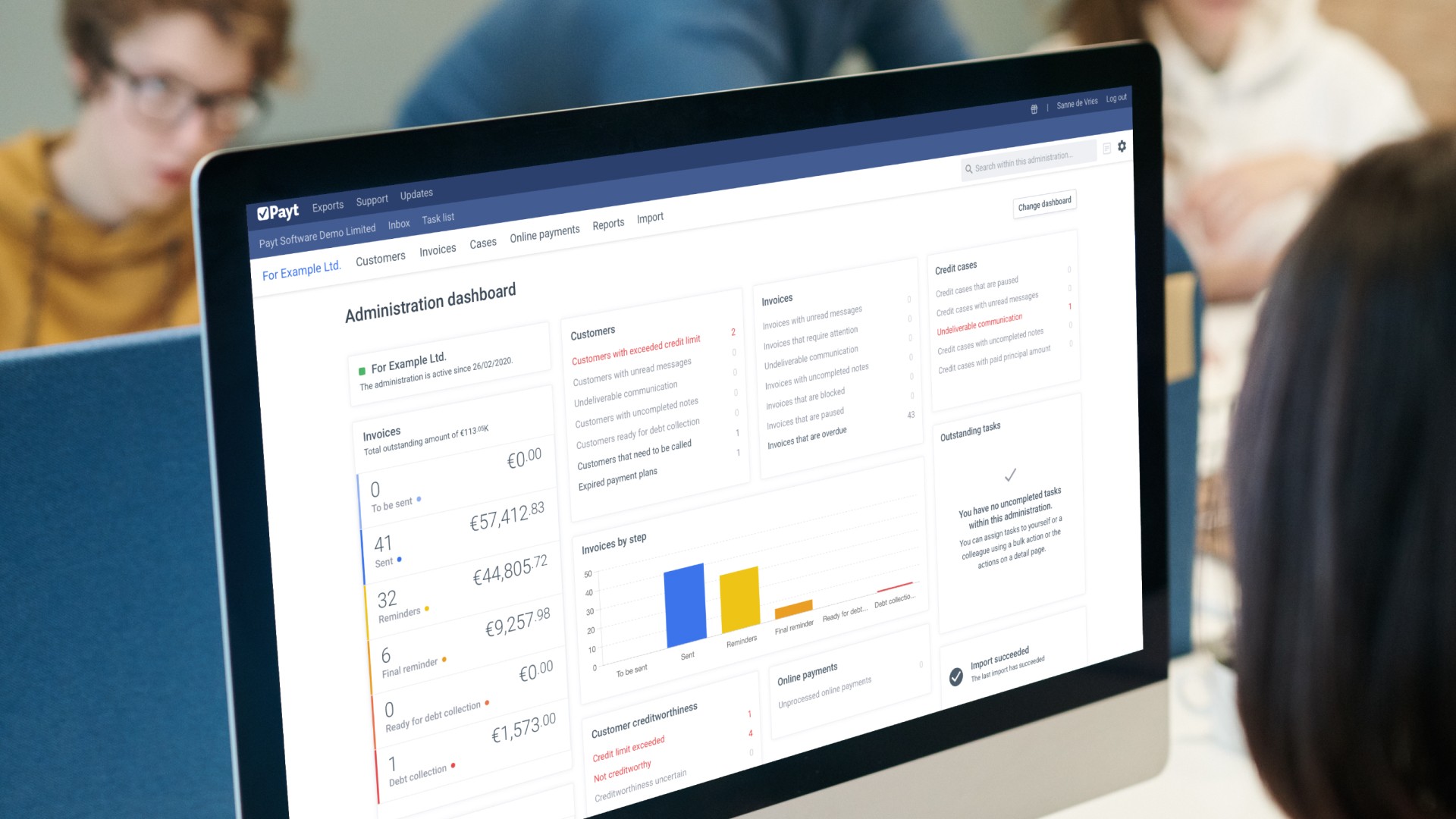
Behind the scenes, the workflow is fundamentally different. Mollie’s API enables Payt to accept any incoming amount, including complex lump sum payments from insurers. Instead of rejecting these payments, the funds successfully land in the clinic’s Virtual IBAN. As soon as the money arrives, a webhook imports the transaction details from the Mollie account directly into Payt’s system.
“We have a shared vision that the payment process should be fully automated,” says Jelger. “With the new API, we can be 100% sure that every transaction is attached to an invoice we created. We don’t have to import data we don’t need, and we can handle refunds with the push of a button.”
Because the Virtual IBANs connect directly to the Mollie balance, funds settle immediately. The total funds are then periodically paid into the clinic’s business bank account according to a set settlement cycle. This consolidation means the clinic deals with a single incoming payout rather than hundreds of individual transfers, drastically reducing the fees charged by its traditional bank.
How Mollie simplified the payment flow
In healthcare, most clinics prefer to manage accounts receivable and reconciliation of incoming payments within the clinic, as it directly relates to the relationship with patients. Dealing with suppliers, salaries etc is typically left to the accountant. This new setup allows for a perfect split, where the process is super efficient. Here is how it works:
Determine the coverage: Payt receives raw treatment data from the clinic’s software and forwards it to the insurer to confirm which costs are covered.
Invoice the patient: Payt creates an invoice for the remaining balance. This includes both an iDEAL | Wero link and the clinic’s unique Virtual IBAN.
Consolidate the funds: Both the patient’s individual payment and the insurance company’s payment are routed to that exact same Virtual IBAN.
Automate the match: As soon as the funds arrive, a webhook pushes the transaction details from Mollie to Payt. Payt’s software then instantly reconciles both payments against the outstanding invoice.
For the clinics, the value is instant. Instead of manually cross-referencing bank statements to match an insurer’s lump sum with a patient’s individual transfer, they get a complete, real-time view of the treatment’s payment status. The invoice is closed automatically, bringing clinics close to a fully hands-off process. And because the funds are collected on the Virtual IBAN, the accountant can focus on all other payments and isn’t confronted with incoming payments that need to be reconciled.
The solution
Payt worked closely with Mollie to design a new bank transfer payment flow built on branded Virtual IBANs and a flexible reconciliation API.
Now, every dental practice can use a unique Virtual IBAN in its own name. When a patient enters the details into their banking app, a green checkmark appears thanks to Verification of Payee (VoP). This confirms the account belongs to the clinic, which instantly builds trust for high-value payments.
Behind the scenes, the workflow is fundamentally different. Mollie’s API enables Payt to accept any incoming amount, including complex lump sum payments from insurers. Instead of rejecting these payments, the funds successfully land in the clinic’s Virtual IBAN. As soon as the money arrives, a webhook imports the transaction details from the Mollie account directly into Payt’s system.
“We have a shared vision that the payment process should be fully automated,” says Jelger. “With the new API, we can be 100% sure that every transaction is attached to an invoice we created. We don’t have to import data we don’t need, and we can handle refunds with the push of a button.”
Because the Virtual IBANs connect directly to the Mollie balance, funds settle immediately. The total funds are then periodically paid into the clinic’s business bank account according to a set settlement cycle. This consolidation means the clinic deals with a single incoming payout rather than hundreds of individual transfers, drastically reducing the fees charged by its traditional bank.
How Mollie simplified the payment flow
In healthcare, most clinics prefer to manage accounts receivable and reconciliation of incoming payments within the clinic, as it directly relates to the relationship with patients. Dealing with suppliers, salaries etc is typically left to the accountant. This new setup allows for a perfect split, where the process is super efficient. Here is how it works:
Determine the coverage: Payt receives raw treatment data from the clinic’s software and forwards it to the insurer to confirm which costs are covered.
Invoice the patient: Payt creates an invoice for the remaining balance. This includes both an iDEAL | Wero link and the clinic’s unique Virtual IBAN.
Consolidate the funds: Both the patient’s individual payment and the insurance company’s payment are routed to that exact same Virtual IBAN.
Automate the match: As soon as the funds arrive, a webhook pushes the transaction details from Mollie to Payt. Payt’s software then instantly reconciles both payments against the outstanding invoice.
For the clinics, the value is instant. Instead of manually cross-referencing bank statements to match an insurer’s lump sum with a patient’s individual transfer, they get a complete, real-time view of the treatment’s payment status. The invoice is closed automatically, bringing clinics close to a fully hands-off process. And because the funds are collected on the Virtual IBAN, the accountant can focus on all other payments and isn’t confronted with incoming payments that need to be reconciled.
The solution
Payt worked closely with Mollie to design a new bank transfer payment flow built on branded Virtual IBANs and a flexible reconciliation API.
Now, every dental practice can use a unique Virtual IBAN in its own name. When a patient enters the details into their banking app, a green checkmark appears thanks to Verification of Payee (VoP). This confirms the account belongs to the clinic, which instantly builds trust for high-value payments.
Behind the scenes, the workflow is fundamentally different. Mollie’s API enables Payt to accept any incoming amount, including complex lump sum payments from insurers. Instead of rejecting these payments, the funds successfully land in the clinic’s Virtual IBAN. As soon as the money arrives, a webhook imports the transaction details from the Mollie account directly into Payt’s system.
“We have a shared vision that the payment process should be fully automated,” says Jelger. “With the new API, we can be 100% sure that every transaction is attached to an invoice we created. We don’t have to import data we don’t need, and we can handle refunds with the push of a button.”
Because the Virtual IBANs connect directly to the Mollie balance, funds settle immediately. The total funds are then periodically paid into the clinic’s business bank account according to a set settlement cycle. This consolidation means the clinic deals with a single incoming payout rather than hundreds of individual transfers, drastically reducing the fees charged by its traditional bank.
How Mollie simplified the payment flow
In healthcare, most clinics prefer to manage accounts receivable and reconciliation of incoming payments within the clinic, as it directly relates to the relationship with patients. Dealing with suppliers, salaries etc is typically left to the accountant. This new setup allows for a perfect split, where the process is super efficient. Here is how it works:
Determine the coverage: Payt receives raw treatment data from the clinic’s software and forwards it to the insurer to confirm which costs are covered.
Invoice the patient: Payt creates an invoice for the remaining balance. This includes both an iDEAL | Wero link and the clinic’s unique Virtual IBAN.
Consolidate the funds: Both the patient’s individual payment and the insurance company’s payment are routed to that exact same Virtual IBAN.
Automate the match: As soon as the funds arrive, a webhook pushes the transaction details from Mollie to Payt. Payt’s software then instantly reconciles both payments against the outstanding invoice.
For the clinics, the value is instant. Instead of manually cross-referencing bank statements to match an insurer’s lump sum with a patient’s individual transfer, they get a complete, real-time view of the treatment’s payment status. The invoice is closed automatically, bringing clinics close to a fully hands-off process. And because the funds are collected on the Virtual IBAN, the accountant can focus on all other payments and isn’t confronted with incoming payments that need to be reconciled.
“With the new API, we can be 100% sure that every transaction is attached to an invoice we created. We don’t have to import data we don’t need, and we can handle refunds with the push of a button.”
Jelger Gustafsson, Founder, Payt
The results
The shift to a more flexible infrastructure fundamentally changed how Payt and its customers manage payments. Although the initial rollout is focused on dental practices, Payt sees this as a repeatable model for other customers dealing with complex bank transfer reconciliation. By introducing Virtual IBANs, Payt can now import only the transactions directly related to the invoices they handle. This simple filter eliminates around 90% of manual reconciliation overhead.
According to Jelger, clinics using the new setup see 99+% of payments automatically reconciled. Payt reduced manual matching drastically, almost completely removing human intervention.
“Our reconciliation scores are now incredibly high,” Jelger says. “We’ll be closing in on 100% fully automated reconciliation. It saves our customers a massive amount of actual time, and they have peace of mind that nothing will go wrong.” - Jelger Gustafsson, Founder, Payt
The financial wins are just as impactful. By moving invoice collections to Mollie, practices are no longer faced with traditional banking costs per incoming transaction, which can range from €0.15 to €0.25 depending on the bank and transaction type. For Payt, building a better product for their sub-merchants directly fuels their own growth.
“The biggest win for us is actually in our acquisition,” Jelger says. “It makes our proposition much simpler. It takes away the hurdles that might have stopped a customer from switching to our solution.”
Payt is already planning their next moves with Mollie. The team wants to bring the same level of frictionless reconciliation to in-person payments by adding Point-of-Sale (POS) terminals. They also want to expand this setup into Germany, France, and the UK.
“It’s these sorts of integrations that allow for better automation and fewer hiccups in the process,” Jelger explains. “That’s what really makes this stand out from what we would be able to do with traditional banks.”
The results
The shift to a more flexible infrastructure fundamentally changed how Payt and its customers manage payments. Although the initial rollout is focused on dental practices, Payt sees this as a repeatable model for other customers dealing with complex bank transfer reconciliation. By introducing Virtual IBANs, Payt can now import only the transactions directly related to the invoices they handle. This simple filter eliminates around 90% of manual reconciliation overhead.
According to Jelger, clinics using the new setup see 99+% of payments automatically reconciled. Payt reduced manual matching drastically, almost completely removing human intervention.
“Our reconciliation scores are now incredibly high,” Jelger says. “We’ll be closing in on 100% fully automated reconciliation. It saves our customers a massive amount of actual time, and they have peace of mind that nothing will go wrong.” - Jelger Gustafsson, Founder, Payt
The financial wins are just as impactful. By moving invoice collections to Mollie, practices are no longer faced with traditional banking costs per incoming transaction, which can range from €0.15 to €0.25 depending on the bank and transaction type. For Payt, building a better product for their sub-merchants directly fuels their own growth.
“The biggest win for us is actually in our acquisition,” Jelger says. “It makes our proposition much simpler. It takes away the hurdles that might have stopped a customer from switching to our solution.”
Payt is already planning their next moves with Mollie. The team wants to bring the same level of frictionless reconciliation to in-person payments by adding Point-of-Sale (POS) terminals. They also want to expand this setup into Germany, France, and the UK.
“It’s these sorts of integrations that allow for better automation and fewer hiccups in the process,” Jelger explains. “That’s what really makes this stand out from what we would be able to do with traditional banks.”
The results
The shift to a more flexible infrastructure fundamentally changed how Payt and its customers manage payments. Although the initial rollout is focused on dental practices, Payt sees this as a repeatable model for other customers dealing with complex bank transfer reconciliation. By introducing Virtual IBANs, Payt can now import only the transactions directly related to the invoices they handle. This simple filter eliminates around 90% of manual reconciliation overhead.
According to Jelger, clinics using the new setup see 99+% of payments automatically reconciled. Payt reduced manual matching drastically, almost completely removing human intervention.
“Our reconciliation scores are now incredibly high,” Jelger says. “We’ll be closing in on 100% fully automated reconciliation. It saves our customers a massive amount of actual time, and they have peace of mind that nothing will go wrong.” - Jelger Gustafsson, Founder, Payt
The financial wins are just as impactful. By moving invoice collections to Mollie, practices are no longer faced with traditional banking costs per incoming transaction, which can range from €0.15 to €0.25 depending on the bank and transaction type. For Payt, building a better product for their sub-merchants directly fuels their own growth.
“The biggest win for us is actually in our acquisition,” Jelger says. “It makes our proposition much simpler. It takes away the hurdles that might have stopped a customer from switching to our solution.”
Payt is already planning their next moves with Mollie. The team wants to bring the same level of frictionless reconciliation to in-person payments by adding Point-of-Sale (POS) terminals. They also want to expand this setup into Germany, France, and the UK.
“It’s these sorts of integrations that allow for better automation and fewer hiccups in the process,” Jelger explains. “That’s what really makes this stand out from what we would be able to do with traditional banks.”
“Our reconciliation scores are now incredibly high. We’ll be closing in on 100% fully automated reconciliation. It saves our customers a massive amount of actual time, and they have peace of mind that nothing will go wrong. ”
Jelger Gustafsson, Founder, Payt
What this means for SaaS platforms
Payt’s story starts in healthcare, but the challenge is not unique to healthcare. Across Europe, SaaS platforms and marketplaces face the same structural problem: legacy bank transfer infrastructure makes it difficult to isolate invoice payments from general corporate cash flow. This creates data noise that slows down accounting for everyone, from healthcare providers to B2B platforms and high-volume B2C brands.
Because bank transfers are predominantly used for high-value transactions where card limits or fees make other methods impractical, every bounced payment represents a significant sum of delayed revenue.
Mollie’s Virtual IBANs and flexible reconciliation infrastructure address this at the platform level. For SaaS businesses like Payt, that means turning a manual cost centre into a scalable, automated product feature – one that makes their platform more valuable to every sub-merchant they serve.
Stop losing bank transfers
If your platform handles bank transfers for sub-merchants, you already know the cost of the auto-refund cycle. Mollie’s Virtual IBANs and Unmatched Credit Transfer API are built to eliminate it.
Discover Mollie for Marketplaces or talk to our team to upgrade your payment flow.
What this means for SaaS platforms
Payt’s story starts in healthcare, but the challenge is not unique to healthcare. Across Europe, SaaS platforms and marketplaces face the same structural problem: legacy bank transfer infrastructure makes it difficult to isolate invoice payments from general corporate cash flow. This creates data noise that slows down accounting for everyone, from healthcare providers to B2B platforms and high-volume B2C brands.
Because bank transfers are predominantly used for high-value transactions where card limits or fees make other methods impractical, every bounced payment represents a significant sum of delayed revenue.
Mollie’s Virtual IBANs and flexible reconciliation infrastructure address this at the platform level. For SaaS businesses like Payt, that means turning a manual cost centre into a scalable, automated product feature – one that makes their platform more valuable to every sub-merchant they serve.
Stop losing bank transfers
If your platform handles bank transfers for sub-merchants, you already know the cost of the auto-refund cycle. Mollie’s Virtual IBANs and Unmatched Credit Transfer API are built to eliminate it.
Discover Mollie for Marketplaces or talk to our team to upgrade your payment flow.
What this means for SaaS platforms
Payt’s story starts in healthcare, but the challenge is not unique to healthcare. Across Europe, SaaS platforms and marketplaces face the same structural problem: legacy bank transfer infrastructure makes it difficult to isolate invoice payments from general corporate cash flow. This creates data noise that slows down accounting for everyone, from healthcare providers to B2B platforms and high-volume B2C brands.
Because bank transfers are predominantly used for high-value transactions where card limits or fees make other methods impractical, every bounced payment represents a significant sum of delayed revenue.
Mollie’s Virtual IBANs and flexible reconciliation infrastructure address this at the platform level. For SaaS businesses like Payt, that means turning a manual cost centre into a scalable, automated product feature – one that makes their platform more valuable to every sub-merchant they serve.
Stop losing bank transfers
If your platform handles bank transfers for sub-merchants, you already know the cost of the auto-refund cycle. Mollie’s Virtual IBANs and Unmatched Credit Transfer API are built to eliminate it.
Discover Mollie for Marketplaces or talk to our team to upgrade your payment flow.
Stay up to date
Never miss an update. Receive product updates, news and customer stories right into your inbox.
Connect every payment. Upgrade every part of your business.
Never miss an update. Receive product updates, news and customer stories right into your inbox.
More stories:
Aikido x Mollie: Securing global growth from startup to unicorn
Belgian cybersecurity unicorn Aikido discovered that a seamless, behind-the-scenes payment solution was the secret to scaling their global SaaS business with a lean finance team.
Ask Phill
Ask Phill's success story: Transforming into more than a webshop builder, embracing Shopify, and partnering with Mollie for seamless payments.
dasistweb
E-commerce done properly: Shopware specialist dasistweb is guiding business customers into the future. Read the dasistweb success story »
Stop losing bank transfers
Mollie’s Virtual IBANs and Unmatched Credit Transfer API are built to eliminate auto-refund.
Simplify payments and money management
Drive revenue, reduce costs, and manage funds with Mollie.
Simplify payments and money management
Drive revenue, reduce costs, and manage funds with Mollie.
Simplify payments and money management
Drive revenue, reduce costs, and manage funds with Mollie.
Simplify payments and money management
Whether you want to grow internationally or focus on a specific market, everything is possible. Mollie supports all known payment methods, so you can grow your business regardless of location.