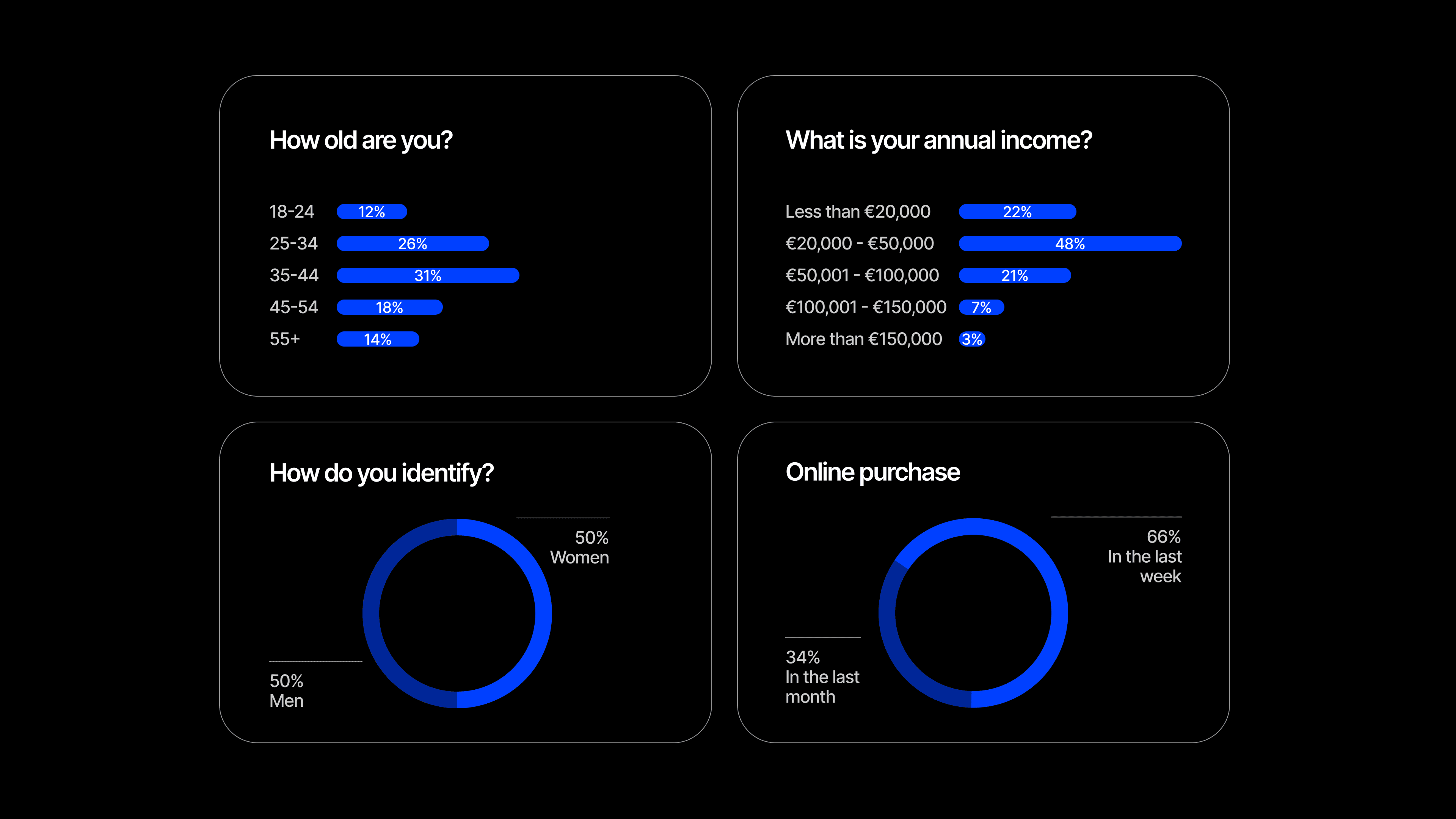
We asked 10,000 consumers from France, Germany, the Netherlands, Belgium, and the UK to pick out key things that are most likely to make a purchase when they're online.


A discount offer when leaving a retailer's website
Offering a discount as a customer is about to leave your site is the most effective way to get them to buy something. In fact, more than 2 in 5 shoppers (41%) say this is a key way to convert them.
How to offer an unmissable exit discount
Trigger the discount window only after the customer has explored high-value products or viewed specific products multiple times. This lets you identify interest and make your discount feel more tailored. Keep the pop-up design clean and unobtrusive so it feels like a natural part of the shopping experience.
Also, think about tailoring your offer urgency based on customer behaviour. Has a customer spent a long time on your site? Show a timer to compel them to complete their purchase quickly (such as 20% off for 10 minutes). Use a softer approach for short-term browsers.
An email/newsletter from a brand I like
In his book 'Building a Story Brand', brand expert Donald Miller explains how he increased sales for one employer by sending a direct email that, in his own words, 'all customers threw away without even opening'. How did this unread direct mail succeed? It reminded contacts that the company existed – even if it did go straight into the bin.
Obviously, you hope your newsletter and emails aren’t going straight into the trash, but they're a great way to maintain a relationship with customers and prospects. They can also be an effective sales tool, with more than a third of consumers (34%) citing it as a reason to buy when browsing online.
Email and newsletter best practices
Good newsletters make a reader feel like you crafted it just for them. How to do that? Lead with a story that resonates with their journey, not just a sales pitch. And use data to create hyper-personalised sections, such as product recommendations based on their browsing or purchase history.
Also, remember to make it easy for customers to shop directly from your emails or newsletters. Use one-click purchase options that autofill payment details for customers with accounts. And add GIFs or carousels to let customers view multiple items and create interactive shopping experiences.
Seeing previously favourited items on a retailer's website
In third place in our survey was showing shoppers items they had previously favourited. In total, just under a third of consumers (32%) say this inspires them to buy something.
How to optimise previously favourited items
Create a story around these items. Use headlines like 'Your favourites are waiting for you'. Pair this copy with dynamic pricing tools that adjust the cost based on customer behaviour. For example, if a consumer has a product favourited for a long time, offer a discount on it when they return to your site.
Also, use AI-powered recommendation engines to suggest related products, and set up automated CRM workflows to send personalised offers. Integrate these with your email marketing tools and on-site messaging to create a seamless journey.
Abandoned cart emails
There are plenty of reasons for cart abandonment. But a well-timed email reminder about the items left in their cart can be a solid sales tactic – with over a quarter of shoppers (28%) saying it would make a purchase.
Abandoned cart email best practice
When sending a cart abandonment email, go beyond the usual reminder. How? By using predictive analytics to assess why the customer left – was it price, shipping, or something else? Tailor the email based on these insights. For example, if the customer browsed a lot before abandoning their cart, highlight similar items they might also like.
Also, add urgency to your offer, like showing real-time stock levels or a time-based discount. FOMO can be a powerful sales tool. Combine this with a one-click return-to-cart button that takes them straight to checkout to win more sales.
Personalised recommendations
With 22%, the fifth most-chosen way to convert more customers was showing personalised recommendations.
How to personalise your ecommerce relationship
Collect and activate customer data: Dive deep into your data. Segment audiences to understand customers on a granular level. Then, use this data for targeted campaigns that resonate with specific segments, like VIP customers or people who only shop during sales.
Incorporate dynamic content: Create dynamic content based on customer behaviour and preferences. Use this to deliver personalised messages across various touch points, creating seamless and relevant customer experiences.
Segment, automate, and personalise: Use automation tools to go beyond generic flows. Implement intelligent automation that responds to real-time customer interactions, ensuring that your brand remains top-of-mind throughout the customer journey.
Search engine result page ads
Ads on search engine results pages are a great way to remind shoppers of items they are interested in or to remind them about your brand. In fact, 1 in 5 shoppers (20%) say seeing a search engine ad is likely to make them buy something.
Search engine ad best practices
Use retargeting ads that specifically highlight products a shopper has shown interest in. Combine this with compelling ad copy (perhaps with a special offer or discount). And don't forget to optimise these ads for mobile, as many shoppers browse while on the go.
Also, set up custom landing pages for different search queries. Tailor the messaging and offers to match the searcher's intent, such as highlighting fast shipping for 'same-day delivery [product]' searches.
Seeing a product being shown off by a social media influencer
Next up in our list of methods to improve your ecommerce conversion rate is seeing a product via an influencer. 17% of shoppers chose this in our survey.
How to optimise your influencer marketing campaigns
Partner with influencers who resonate with your target audience and have a genuine connection to your product. Authenticity is really crucial, whether it's a tutorial, review, or lifestyle post. Don't try to control the creative too much, but let the influencer do what they do (and know) best. Track engagement and conversion rates to refine your influencer marketing strategy over time.
Social media adverts
With only 16% of consumers choosing them, social media ads might be less likely than the other methods to convert. But when done right, tailored ads can catch the eye and drive sales.
Social media ad best practices
Target specific audience segments based on their interests, behaviour, or past interactions with your brand to make your ads more effective. And use sequential retargeting: Don't just show the same ad repeatedly; instead, create a series of ads that guide a customer through their buying journey.
Here’s how:
The first ad introduces the product
The second addresses a common pain point
The third offers a time-sensitive deal
This nurtures potential buyers and increases conversion rates by providing context and relevance at every touchpoint.
Related product suggestions
Last in our table of conversion tactics are related product suggestions, with 15% of the vote.
Related product suggestions best practices
Guide your customers through their shopping journey with smart related product suggestions. If they're looking at a lamp, why not suggest the perfect lightbulb to go with it? This can lead to more sales by offering a complete solution rather than just a single item. And offer bundle deals or discounts on complementary items to increase the overall order value.