10 ways to use data to increase conversion

Discover how to collect customer data and use it to increase conversions and drive sales.

Discover how to collect customer data and use it to increase conversions and drive sales.

20 Jul 2022

Running a business shouldn’t feel like an uphill struggle. When growth feels difficult, data is the most powerful tool you have to simplify the journey. By understanding exactly how your customers shop, you can stop guessing and start using the practical changes that actually encourage people to buy.

In this guide, we’ll explore how to collect high-quality data and then use that data to understand your customers, remove friction, and increase your conversion rates.

Running a business shouldn’t feel like an uphill struggle. When growth feels difficult, data is the most powerful tool you have to simplify the journey. By understanding exactly how your customers shop, you can stop guessing and start using the practical changes that actually encourage people to buy.

In this guide, we’ll explore how to collect high-quality data and then use that data to understand your customers, remove friction, and increase your conversion rates.

Running a business shouldn’t feel like an uphill struggle. When growth feels difficult, data is the most powerful tool you have to simplify the journey. By understanding exactly how your customers shop, you can stop guessing and start using the practical changes that actually encourage people to buy.

In this guide, we’ll explore how to collect high-quality data and then use that data to understand your customers, remove friction, and increase your conversion rates.

Running a business shouldn’t feel like an uphill struggle. When growth feels difficult, data is the most powerful tool you have to simplify the journey. By understanding exactly how your customers shop, you can stop guessing and start using the practical changes that actually encourage people to buy.

In this guide, we’ll explore how to collect high-quality data and then use that data to understand your customers, remove friction, and increase your conversion rates.

How to collect customer data

In ecommerce, data is the voice of your customer. But to get the full picture of how your business is performing in 2026, you need to look beyond just your daily sales figures.

Here are four specific places where you can find the insights that matter:

  • Implement first-party tracking: Use tools like Google Analytics 4 to own the data generated by your own website and apps. This tells you exactly how users move through your online store

  • Ask for information directly:  Use style quizzes or post-purchase surveys to gather ‘zero-party data’ – the details customers willingly share with you in exchange for a better, more personal experience. 

  • Dig into your payment insights: Your Mollie Dashboard is a goldmine. Use it to track real-time transaction success, analyse why payments fail, and monitor refund patterns to spot product issues early.

  • Prepare for AI agents: Analyse your server logs to see how automated assistants (AI bots) are interacting with your store. While this is still an emerging trend, ensuring that AI agents can easily find your price and stock data now ensures that they’ll be able to buy from you.

By treating every digital touchpoint as a data source, you can map the entire customer journey to spotthe friction points that prevent sales and the triggers that drive them.

In ecommerce, data is the voice of your customer. But to get the full picture of how your business is performing in 2026, you need to look beyond just your daily sales figures.

Here are four specific places where you can find the insights that matter:

  • Implement first-party tracking: Use tools like Google Analytics 4 to own the data generated by your own website and apps. This tells you exactly how users move through your online store

  • Ask for information directly:  Use style quizzes or post-purchase surveys to gather ‘zero-party data’ – the details customers willingly share with you in exchange for a better, more personal experience. 

  • Dig into your payment insights: Your Mollie Dashboard is a goldmine. Use it to track real-time transaction success, analyse why payments fail, and monitor refund patterns to spot product issues early.

  • Prepare for AI agents: Analyse your server logs to see how automated assistants (AI bots) are interacting with your store. While this is still an emerging trend, ensuring that AI agents can easily find your price and stock data now ensures that they’ll be able to buy from you.

By treating every digital touchpoint as a data source, you can map the entire customer journey to spotthe friction points that prevent sales and the triggers that drive them.

In ecommerce, data is the voice of your customer. But to get the full picture of how your business is performing in 2026, you need to look beyond just your daily sales figures.

Here are four specific places where you can find the insights that matter:

  • Implement first-party tracking: Use tools like Google Analytics 4 to own the data generated by your own website and apps. This tells you exactly how users move through your online store

  • Ask for information directly:  Use style quizzes or post-purchase surveys to gather ‘zero-party data’ – the details customers willingly share with you in exchange for a better, more personal experience. 

  • Dig into your payment insights: Your Mollie Dashboard is a goldmine. Use it to track real-time transaction success, analyse why payments fail, and monitor refund patterns to spot product issues early.

  • Prepare for AI agents: Analyse your server logs to see how automated assistants (AI bots) are interacting with your store. While this is still an emerging trend, ensuring that AI agents can easily find your price and stock data now ensures that they’ll be able to buy from you.

By treating every digital touchpoint as a data source, you can map the entire customer journey to spotthe friction points that prevent sales and the triggers that drive them.

In ecommerce, data is the voice of your customer. But to get the full picture of how your business is performing in 2026, you need to look beyond just your daily sales figures.

Here are four specific places where you can find the insights that matter:

  • Implement first-party tracking: Use tools like Google Analytics 4 to own the data generated by your own website and apps. This tells you exactly how users move through your online store

  • Ask for information directly:  Use style quizzes or post-purchase surveys to gather ‘zero-party data’ – the details customers willingly share with you in exchange for a better, more personal experience. 

  • Dig into your payment insights: Your Mollie Dashboard is a goldmine. Use it to track real-time transaction success, analyse why payments fail, and monitor refund patterns to spot product issues early.

  • Prepare for AI agents: Analyse your server logs to see how automated assistants (AI bots) are interacting with your store. While this is still an emerging trend, ensuring that AI agents can easily find your price and stock data now ensures that they’ll be able to buy from you.

By treating every digital touchpoint as a data source, you can map the entire customer journey to spotthe friction points that prevent sales and the triggers that drive them.

10 ways to use data to increase ecommerce conversion

1. Master geo-data for localised success  

Understanding where your shoppers are located is the first step to building trust. By analysing geo-data, you can see where visitors live and how they prefer to pay. To help, you should use a checkout that automatically shows your customers’ preferred  language and payment methods, such as iDEAL | Wero in the Netherlands or Bancontact in Belgium. 

At Mollie, we’ve helped businesses more than double their conversion rates by automatically surfacing these localised options based on real-time location data using tools like GA4 and the Mollie Dashboard.

2. Discover when your customers like to buy

You can discover a lot about your customers’ spending habits by analysing your data to find the specific times they prefer to shop. Knowing this allows you to match your marketing activities with their daily rhythms, such as targeting them during lunch breaks or while they scroll their socials in the evening. 

With the right tools, such as GA4 and CRM software, you can even personalise this for individual shoppers. If a customer hasn’t purchased in a while, personalised retargeting ads based on their purchase history are an effective way to re-engage them and drive repeat purchases.

3. Use zero-party data to build loved brands

With the end of third-party cookies, the most valuable data comes from what customers willingly share. 

This zero-party data includes information such as sizes, style preferences, or skin types shared through interactive site quizzes or preference centres. By feeding this information into your CRM, you can personalise the entire shopping experience.

For example, if a customer tells you they are a size medium, you can ensure they never see an “out of stock” notification for that size again, making the customer experience feel more personal and tailored to their needs.

4. Identify (and fix) cart abandonment triggers

A shopper leaving their cart is a signal that your checkout process has friction.

There are many reasons a customer might decide to abandon their cart – unexpected costs, account creation requirements, and security concerns. The list goes on. 

You can pinpoint exactly where they drop off by tracking exit pages in GA4 or by watching where they hesitate using heatmaps like Hotjar. Once you identify the bottleneck, you can simplify the process by offering guest checkouts or one-click payments to remove friction between browsing and buying.

Read more tips and tricks to reduce card abandonment in our complete guide to conversion rate optimisation

5. Recover revenue with intelligent retargeting

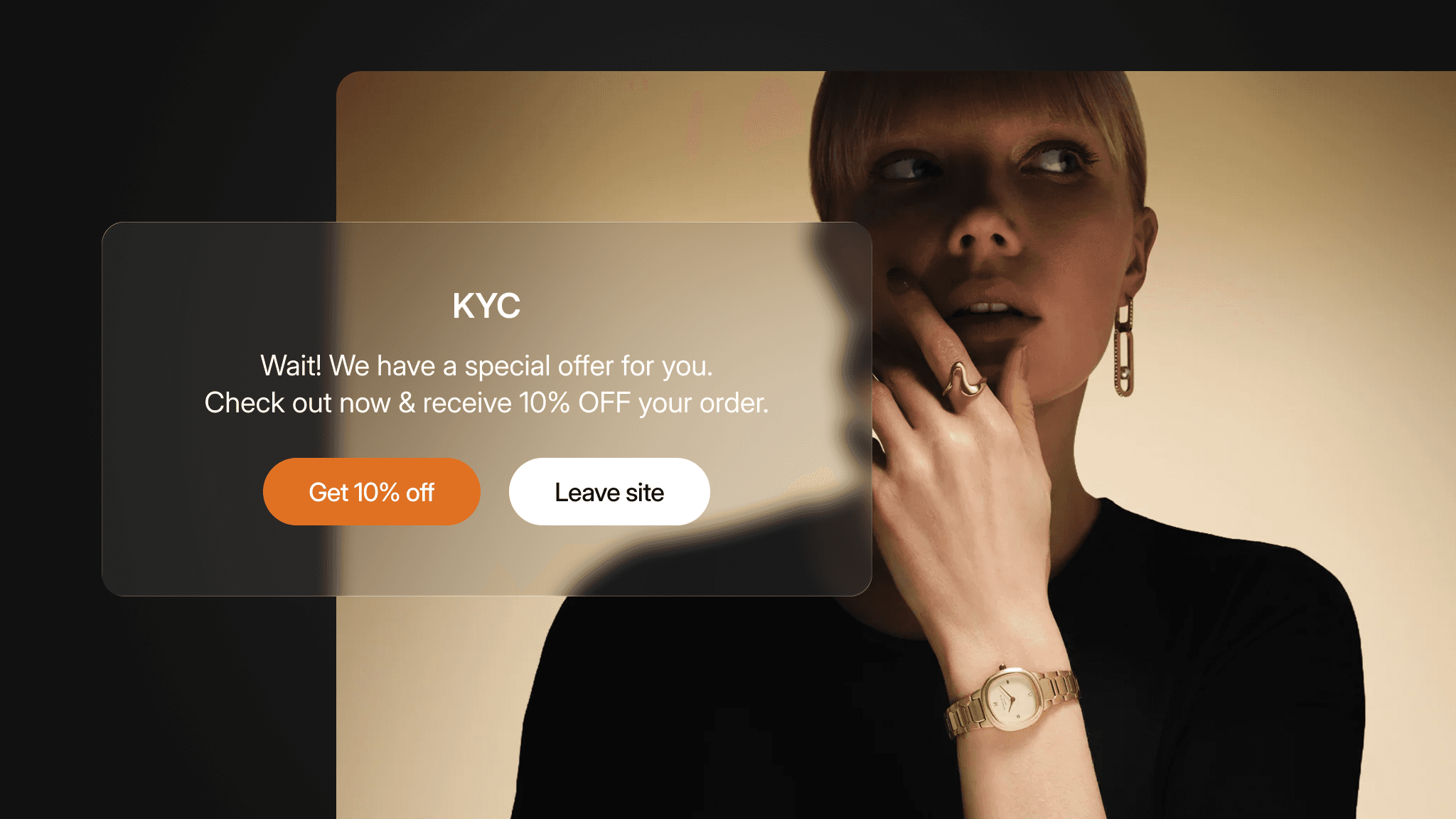
If a customer abandons their cart, the data tells you exactly what they were looking for. You can use the abandoned item details and the specific abandonment time to trigger automated recovery efforts. 

By using predictive analytics in your email marketing software, you can send a second-chance email with a personalised discount, offering just enough incentive to win the sale without hurting your margins.

Mollie’s own second-chance feature helps you recover these sales automatically with the flick of a switch.
6. Optimise for the mobile-only flow

Mobile commerce now accounts for the vast majority of European sales. As of 2025, Statista data shows that mobile devices drive an estimated 77% of all ecommerce website visits. If your device-specific data shows a high exit rate for mobile users, your checkout likely takes too long to load or is too complex for a small screen.

To fix this, you can use PageSpeed Insights, which shows the user experience of a page on both mobile and desktop, then provides suggestions on how to improve the page. Payment partners like Mollie also allow you to implement QR codes that bridge the gap between desktop browsing and mobile paying. Ensuring buttons are thumb-friendly and load times are under two seconds is essential for keeping mobile shoppers engaged.

7. Discover why (and where) they leave

While cart abandonment is a major hurdle, it’s just as important to understand why shoppers leave your site without even starting to fill their basket.

By analysing your analytics to identify the pages with the highest exit rates, you can determine what might be driving visitors away. If they’re leaving at a specific product page, maybe the information isn’t clear. If it’s a shipping information page, then perhaps the costs are confusing. Identifying these high-drop-off points helps you fix the underlying issue and keep them browsing.

8. Understand preferred payment methods

Every shopper has a favourite way to pay, and if you don't offer it, they often won't buy. The ideal payment methods often depend on where your customers are and what they’re buying.

By looking at your transaction data with a partner like Mollie, you can access real-time payment data to see exactly how your customers prefer to pay – whether that’s credit cards, local heroes, or buy now, pay later.

A good payment partner should also should help you understand the data so you can use it to drive growth.

9. Use AI for real-time personalisation

The days of the static, one-size-fits-all storefront are fading. Modern conversion is about using real-time data to shape the customer experience as they browse. Take Skincare brand The INKEY List, who use their Breakout Analyser tool to gather customer input and provide personalised treatment plans in real time. 

In the near future, we’ll see more platforms that can spot a customer comparing winter coats and automatically reorder pages and checkout flows to keep those items front and centre. Or, if the system detects an iPhone user late at night, it could dynamically move Apple Pay to the top of the list, removing friction exactly when it matters most. While this level of dynamic tailoring remains new for many businesses, the tools to enable it are becoming more accessible.

10. Decode payment analytics

The fine print of your transaction data often hides the biggest opportunities for growth. By looking at payment decline reasons and refund rates in your Mollie Dashboard or via webhooks, you can spot patterns that indicate technical glitches or overly sensitive fraud filters.

Addressing these hidden issues lets you instantly unlock revenue that was already at your doorstep but blocked by a simple technical barrier.

You can also access data using the Mollie App, which offers a statistics page that shows your business performance, including revenue over time, the total number of payments, comparisons with previous periods, and more. This helps you to always know exactly how the business is performing.


1. Master geo-data for localised success  

Understanding where your shoppers are located is the first step to building trust. By analysing geo-data, you can see where visitors live and how they prefer to pay. To help, you should use a checkout that automatically shows your customers’ preferred  language and payment methods, such as iDEAL | Wero in the Netherlands or Bancontact in Belgium. 

At Mollie, we’ve helped businesses more than double their conversion rates by automatically surfacing these localised options based on real-time location data using tools like GA4 and the Mollie Dashboard.

2. Discover when your customers like to buy

You can discover a lot about your customers’ spending habits by analysing your data to find the specific times they prefer to shop. Knowing this allows you to match your marketing activities with their daily rhythms, such as targeting them during lunch breaks or while they scroll their socials in the evening. 

With the right tools, such as GA4 and CRM software, you can even personalise this for individual shoppers. If a customer hasn’t purchased in a while, personalised retargeting ads based on their purchase history are an effective way to re-engage them and drive repeat purchases.

3. Use zero-party data to build loved brands

With the end of third-party cookies, the most valuable data comes from what customers willingly share. 

This zero-party data includes information such as sizes, style preferences, or skin types shared through interactive site quizzes or preference centres. By feeding this information into your CRM, you can personalise the entire shopping experience.

For example, if a customer tells you they are a size medium, you can ensure they never see an “out of stock” notification for that size again, making the customer experience feel more personal and tailored to their needs.

4. Identify (and fix) cart abandonment triggers

A shopper leaving their cart is a signal that your checkout process has friction.

There are many reasons a customer might decide to abandon their cart – unexpected costs, account creation requirements, and security concerns. The list goes on. 

You can pinpoint exactly where they drop off by tracking exit pages in GA4 or by watching where they hesitate using heatmaps like Hotjar. Once you identify the bottleneck, you can simplify the process by offering guest checkouts or one-click payments to remove friction between browsing and buying.

Read more tips and tricks to reduce card abandonment in our complete guide to conversion rate optimisation

5. Recover revenue with intelligent retargeting

If a customer abandons their cart, the data tells you exactly what they were looking for. You can use the abandoned item details and the specific abandonment time to trigger automated recovery efforts. 

By using predictive analytics in your email marketing software, you can send a second-chance email with a personalised discount, offering just enough incentive to win the sale without hurting your margins.

Mollie’s own second-chance feature helps you recover these sales automatically with the flick of a switch.

6. Optimise for the mobile-only flow

Mobile commerce now accounts for the vast majority of European sales. As of 2025, Statista data shows that mobile devices drive an estimated 77% of all ecommerce website visits. If your device-specific data shows a high exit rate for mobile users, your checkout likely takes too long to load or is too complex for a small screen.

To fix this, you can use PageSpeed Insights, which shows the user experience of a page on both mobile and desktop, then provides suggestions on how to improve the page. Payment partners like Mollie also allow you to implement QR codes that bridge the gap between desktop browsing and mobile paying. Ensuring buttons are thumb-friendly and load times are under two seconds is essential for keeping mobile shoppers engaged.

7. Discover why (and where) they leave

While cart abandonment is a major hurdle, it’s just as important to understand why shoppers leave your site without even starting to fill their basket.

By analysing your analytics to identify the pages with the highest exit rates, you can determine what might be driving visitors away. If they’re leaving at a specific product page, maybe the information isn’t clear. If it’s a shipping information page, then perhaps the costs are confusing. Identifying these high-drop-off points helps you fix the underlying issue and keep them browsing.

8. Understand preferred payment methods

Every shopper has a favourite way to pay, and if you don't offer it, they often won't buy. The ideal payment methods often depend on where your customers are and what they’re buying.

By looking at your transaction data with a partner like Mollie, you can access real-time payment data to see exactly how your customers prefer to pay – whether that’s credit cards, local heroes, or buy now, pay later.

A good payment partner should also should help you understand the data so you can use it to drive growth.

9. Use AI for real-time personalisation

The days of the static, one-size-fits-all storefront are fading. Modern conversion is about using real-time data to shape the customer experience as they browse. Take Skincare brand The INKEY List, who use their Breakout Analyser tool to gather customer input and provide personalised treatment plans in real time. 

In the near future, we’ll see more platforms that can spot a customer comparing winter coats and automatically reorder pages and checkout flows to keep those items front and centre. Or, if the system detects an iPhone user late at night, it could dynamically move Apple Pay to the top of the list, removing friction exactly when it matters most. While this level of dynamic tailoring remains new for many businesses, the tools to enable it are becoming more accessible.

10. Decode payment analytics

The fine print of your transaction data often hides the biggest opportunities for growth. By looking at payment decline reasons and refund rates in your Mollie Dashboard or via webhooks, you can spot patterns that indicate technical glitches or overly sensitive fraud filters.

Addressing these hidden issues lets you instantly unlock revenue that was already at your doorstep but blocked by a simple technical barrier.

You can also access data using the Mollie App, which offers a statistics page that shows your business performance, including revenue over time, the total number of payments, comparisons with previous periods, and more. This helps you to always know exactly how the business is performing.

1. Master geo-data for localised success  

Understanding where your shoppers are located is the first step to building trust. By analysing geo-data, you can see where visitors live and how they prefer to pay. To help, you should use a checkout that automatically shows your customers’ preferred  language and payment methods, such as iDEAL | Wero in the Netherlands or Bancontact in Belgium. 

At Mollie, we’ve helped businesses more than double their conversion rates by automatically surfacing these localised options based on real-time location data using tools like GA4 and the Mollie Dashboard.

2. Discover when your customers like to buy

You can discover a lot about your customers’ spending habits by analysing your data to find the specific times they prefer to shop. Knowing this allows you to match your marketing activities with their daily rhythms, such as targeting them during lunch breaks or while they scroll their socials in the evening. 

With the right tools, such as GA4 and CRM software, you can even personalise this for individual shoppers. If a customer hasn’t purchased in a while, personalised retargeting ads based on their purchase history are an effective way to re-engage them and drive repeat purchases.

3. Use zero-party data to build loved brands

With the end of third-party cookies, the most valuable data comes from what customers willingly share. 

This zero-party data includes information such as sizes, style preferences, or skin types shared through interactive site quizzes or preference centres. By feeding this information into your CRM, you can personalise the entire shopping experience.

For example, if a customer tells you they are a size medium, you can ensure they never see an “out of stock” notification for that size again, making the customer experience feel more personal and tailored to their needs.

4. Identify (and fix) cart abandonment triggers

A shopper leaving their cart is a signal that your checkout process has friction.

There are many reasons a customer might decide to abandon their cart – unexpected costs, account creation requirements, and security concerns. The list goes on. 

You can pinpoint exactly where they drop off by tracking exit pages in GA4 or by watching where they hesitate using heatmaps like Hotjar. Once you identify the bottleneck, you can simplify the process by offering guest checkouts or one-click payments to remove friction between browsing and buying.

Read more tips and tricks to reduce card abandonment in our complete guide to conversion rate optimisation

5. Recover revenue with intelligent retargeting

If a customer abandons their cart, the data tells you exactly what they were looking for. You can use the abandoned item details and the specific abandonment time to trigger automated recovery efforts. 

By using predictive analytics in your email marketing software, you can send a second-chance email with a personalised discount, offering just enough incentive to win the sale without hurting your margins.

Mollie’s own second-chance feature helps you recover these sales automatically with the flick of a switch.

6. Optimise for the mobile-only flow

Mobile commerce now accounts for the vast majority of European sales. As of 2025, Statista data shows that mobile devices drive an estimated 77% of all ecommerce website visits. If your device-specific data shows a high exit rate for mobile users, your checkout likely takes too long to load or is too complex for a small screen.

To fix this, you can use PageSpeed Insights, which shows the user experience of a page on both mobile and desktop, then provides suggestions on how to improve the page. Payment partners like Mollie also allow you to implement QR codes that bridge the gap between desktop browsing and mobile paying. Ensuring buttons are thumb-friendly and load times are under two seconds is essential for keeping mobile shoppers engaged.

7. Discover why (and where) they leave

While cart abandonment is a major hurdle, it’s just as important to understand why shoppers leave your site without even starting to fill their basket.

By analysing your analytics to identify the pages with the highest exit rates, you can determine what might be driving visitors away. If they’re leaving at a specific product page, maybe the information isn’t clear. If it’s a shipping information page, then perhaps the costs are confusing. Identifying these high-drop-off points helps you fix the underlying issue and keep them browsing.

8. Understand preferred payment methods

Every shopper has a favourite way to pay, and if you don't offer it, they often won't buy. The ideal payment methods often depend on where your customers are and what they’re buying.

By looking at your transaction data with a partner like Mollie, you can access real-time payment data to see exactly how your customers prefer to pay – whether that’s credit cards, local heroes, or buy now, pay later.

A good payment partner should also should help you understand the data so you can use it to drive growth.

9. Use AI for real-time personalisation

The days of the static, one-size-fits-all storefront are fading. Modern conversion is about using real-time data to shape the customer experience as they browse. Take Skincare brand The INKEY List, who use their Breakout Analyser tool to gather customer input and provide personalised treatment plans in real time. 

In the near future, we’ll see more platforms that can spot a customer comparing winter coats and automatically reorder pages and checkout flows to keep those items front and centre. Or, if the system detects an iPhone user late at night, it could dynamically move Apple Pay to the top of the list, removing friction exactly when it matters most. While this level of dynamic tailoring remains new for many businesses, the tools to enable it are becoming more accessible.

10. Decode payment analytics

The fine print of your transaction data often hides the biggest opportunities for growth. By looking at payment decline reasons and refund rates in your Mollie Dashboard or via webhooks, you can spot patterns that indicate technical glitches or overly sensitive fraud filters.

Addressing these hidden issues lets you instantly unlock revenue that was already at your doorstep but blocked by a simple technical barrier.

You can also access data using the Mollie App, which offers a statistics page that shows your business performance, including revenue over time, the total number of payments, comparisons with previous periods, and more. This helps you to always know exactly how the business is performing.

1. Master geo-data for localised success  

Understanding where your shoppers are located is the first step to building trust. By analysing geo-data, you can see where visitors live and how they prefer to pay. To help, you should use a checkout that automatically shows your customers’ preferred  language and payment methods, such as iDEAL | Wero in the Netherlands or Bancontact in Belgium. 

At Mollie, we’ve helped businesses more than double their conversion rates by automatically surfacing these localised options based on real-time location data using tools like GA4 and the Mollie Dashboard.

2. Discover when your customers like to buy

You can discover a lot about your customers’ spending habits by analysing your data to find the specific times they prefer to shop. Knowing this allows you to match your marketing activities with their daily rhythms, such as targeting them during lunch breaks or while they scroll their socials in the evening. 

With the right tools, such as GA4 and CRM software, you can even personalise this for individual shoppers. If a customer hasn’t purchased in a while, personalised retargeting ads based on their purchase history are an effective way to re-engage them and drive repeat purchases.

3. Use zero-party data to build loved brands

With the end of third-party cookies, the most valuable data comes from what customers willingly share. 

This zero-party data includes information such as sizes, style preferences, or skin types shared through interactive site quizzes or preference centres. By feeding this information into your CRM, you can personalise the entire shopping experience.

For example, if a customer tells you they are a size medium, you can ensure they never see an “out of stock” notification for that size again, making the customer experience feel more personal and tailored to their needs.

4. Identify (and fix) cart abandonment triggers

A shopper leaving their cart is a signal that your checkout process has friction.

There are many reasons a customer might decide to abandon their cart – unexpected costs, account creation requirements, and security concerns. The list goes on. 

You can pinpoint exactly where they drop off by tracking exit pages in GA4 or by watching where they hesitate using heatmaps like Hotjar. Once you identify the bottleneck, you can simplify the process by offering guest checkouts or one-click payments to remove friction between browsing and buying.

Read more tips and tricks to reduce card abandonment in our complete guide to conversion rate optimisation

5. Recover revenue with intelligent retargeting

If a customer abandons their cart, the data tells you exactly what they were looking for. You can use the abandoned item details and the specific abandonment time to trigger automated recovery efforts. 

By using predictive analytics in your email marketing software, you can send a second-chance email with a personalised discount, offering just enough incentive to win the sale without hurting your margins.

Mollie’s own second-chance feature helps you recover these sales automatically with the flick of a switch.

6. Optimise for the mobile-only flow

Mobile commerce now accounts for the vast majority of European sales. As of 2025, Statista data shows that mobile devices drive an estimated 77% of all ecommerce website visits. If your device-specific data shows a high exit rate for mobile users, your checkout likely takes too long to load or is too complex for a small screen.

To fix this, you can use PageSpeed Insights, which shows the user experience of a page on both mobile and desktop, then provides suggestions on how to improve the page. Payment partners like Mollie also allow you to implement QR codes that bridge the gap between desktop browsing and mobile paying. Ensuring buttons are thumb-friendly and load times are under two seconds is essential for keeping mobile shoppers engaged.

7. Discover why (and where) they leave

While cart abandonment is a major hurdle, it’s just as important to understand why shoppers leave your site without even starting to fill their basket.

By analysing your analytics to identify the pages with the highest exit rates, you can determine what might be driving visitors away. If they’re leaving at a specific product page, maybe the information isn’t clear. If it’s a shipping information page, then perhaps the costs are confusing. Identifying these high-drop-off points helps you fix the underlying issue and keep them browsing.

8. Understand preferred payment methods

Every shopper has a favourite way to pay, and if you don't offer it, they often won't buy. The ideal payment methods often depend on where your customers are and what they’re buying.

By looking at your transaction data with a partner like Mollie, you can access real-time payment data to see exactly how your customers prefer to pay – whether that’s credit cards, local heroes, or buy now, pay later.

A good payment partner should also should help you understand the data so you can use it to drive growth.

9. Use AI for real-time personalisation

The days of the static, one-size-fits-all storefront are fading. Modern conversion is about using real-time data to shape the customer experience as they browse. Take Skincare brand The INKEY List, who use their Breakout Analyser tool to gather customer input and provide personalised treatment plans in real time. 

In the near future, we’ll see more platforms that can spot a customer comparing winter coats and automatically reorder pages and checkout flows to keep those items front and centre. Or, if the system detects an iPhone user late at night, it could dynamically move Apple Pay to the top of the list, removing friction exactly when it matters most. While this level of dynamic tailoring remains new for many businesses, the tools to enable it are becoming more accessible.

10. Decode payment analytics

The fine print of your transaction data often hides the biggest opportunities for growth. By looking at payment decline reasons and refund rates in your Mollie Dashboard or via webhooks, you can spot patterns that indicate technical glitches or overly sensitive fraud filters.

Addressing these hidden issues lets you instantly unlock revenue that was already at your doorstep but blocked by a simple technical barrier.

You can also access data using the Mollie App, which offers a statistics page that shows your business performance, including revenue over time, the total number of payments, comparisons with previous periods, and more. This helps you to always know exactly how the business is performing.

Stop guessing, start growing

Think of data like a chisel that you can use to chip away at the problems holding back your business. It allows you to delight shoppers, make customers happier, and sell more effectively.

Running a business will rarely feel easy, but being smart about your data makes it feel more manageable.

Think of data like a chisel that you can use to chip away at the problems holding back your business. It allows you to delight shoppers, make customers happier, and sell more effectively.

Running a business will rarely feel easy, but being smart about your data makes it feel more manageable.

Think of data like a chisel that you can use to chip away at the problems holding back your business. It allows you to delight shoppers, make customers happier, and sell more effectively.

Running a business will rarely feel easy, but being smart about your data makes it feel more manageable.

Think of data like a chisel that you can use to chip away at the problems holding back your business. It allows you to delight shoppers, make customers happier, and sell more effectively.

Running a business will rarely feel easy, but being smart about your data makes it feel more manageable.

Grow your way with Mollie

At Mollie, we provide the effortless payment solution you need to turn data insights into growth. Access 35+ leading payment methods, a conversion-optimised checkout, and real-time analytics designed to help you sell more.

Ready to see what your data can do? Find out more about payments with Mollie.

At Mollie, we provide the effortless payment solution you need to turn data insights into growth. Access 35+ leading payment methods, a conversion-optimised checkout, and real-time analytics designed to help you sell more.

Ready to see what your data can do? Find out more about payments with Mollie.

At Mollie, we provide the effortless payment solution you need to turn data insights into growth. Access 35+ leading payment methods, a conversion-optimised checkout, and real-time analytics designed to help you sell more.

Ready to see what your data can do? Find out more about payments with Mollie.

At Mollie, we provide the effortless payment solution you need to turn data insights into growth. Access 35+ leading payment methods, a conversion-optimised checkout, and real-time analytics designed to help you sell more.

Ready to see what your data can do? Find out more about payments with Mollie.

Stay up to date

Never miss an update. Receive product updates, news and customer stories right into your inbox.

Stay up to date

Never miss an update. Receive product updates, news and customer stories right into your inbox.

Stay up to date

Never miss an update. Receive product updates, news and customer stories right into your inbox.

Stay up to date

Never miss an update. Receive product updates, news and customer stories right into your inbox.

Form fields
Form fields
Form fields
Form fields

Table of contents

Table of contents

Table of contents

Table of contents

MollieGrowth10 ways to use data to increase conversion