
AI-powered commerce in 2026: What's ready, what isn't, and where to focus

Discover the two-path framework for agentic commerce and the AI strategy you should focus on today.

Discover the two-path framework for agentic commerce and the AI strategy you should focus on today.

Blog banner ai-powered commerce

If you spent any time in commerce circles in 2025, you couldn’t move for talk of AI agents. Every conference, every newsletter, every vendor pitch promised the same thing: autonomous AI would soon handle the entire customer journey, end-to-end.

It was compelling, but it was also premature.

Even the industry’s biggest players are recalibrating, with OpenAI recently pivoting its Agentic Commerce Protocol (ACP) and abandoning its ‘instant checkout’.

You’ve probably noticed this yourself. The gap between what AI agents can theoretically do and what your payment stack, your bank, and your customers are actually ready for is wider than the headlines suggest.

Strip away the noise, and the reality of agentic commerce splits into two distinct paths. They operate on very different timelines, and they carry very different levels of risk for your P&L today. Let’s take a look at what those are.
Two different paths, two different timelines

Path 1: Agentic discovery (the LLM interface)

Path 1 is the LLM interface – this is what happens when your customer is actively present, interacting with an AI assistant like ChatGPT or Gemini, and that assistant helps them discover, evaluate, and move towards purchasing a product. The customer is in the loop, and the agent is a sophisticated, context-aware intermediary.

You’ve probably shopped like this yourself. It’s happening now, it’s growing fast, and it has clear implications for how you structure your product data and your digital presence.

How the model operates

When a customer opens ChatGPT and asks, “What’s the best commercial espresso machine for a small café with a budget of around €3,000?” – that’s agentic discovery.

The model then pulls from its training data, live web browsing, structured product feeds, and whatever other signals it can find to construct a recommendation. Your product either appears in that answer, or it doesn’t.

This isn’t hypothetical. It’s already how a meaningful and growing segment of your customers are starting to shop.

The platforms driving the agentic shift

Perplexity has built an entire product around shopping discovery, Google's AI Overviews are reshaping what appears above the fold in search results, and ChatGPT is still exploring its shopping capabilities. In all of these scenarios, the customer still makes the final call – but the agent dictates exactly what they see and consider.

Think of the AI less like a transaction tool and more like an encyclopaedic sales consultant. It has read everything ever written about your product category and can have a nuanced conversation about it with your customer. Except this consultant is available 24 hours a day, speaks every language, and serves thousands of customers simultaneously.

Path 2: Agentic transactions (the delegated buyer)

This is the delegated agentic transaction. A customer gives an AI agent a standing instruction and a budget, and the agent executes purchases autonomously in the background. The customer is entirely out of the loop, and the agent is making financial decisions on their behalf.

How the delegated agentic model works

A customer decides they want to stop thinking about a category of recurring purchases – household supplies, office consumables, standard B2B inputs – and delegates the decision to an AI. They set the parameters: “Find me a cheaper supplier for coffee; you’ve got a €50 monthly budget, make sure it’s a sustainable brand, and always find the lowest price.” The agent then monitors, selects, and executes purchases autonomously. 

For the customer, this is genuinely useful. It eliminates low-value cognitive load. For businesses who reliably meet the agent’s criteria, it represents recurring revenue that doesn’t depend on winning the customer’s attention every month. It shifts purchasing from an active chore to a background process that’s taken care of on their behalf.

Why the delegated infrastructure isn't ready

As a concept, delegated commerce is genuinely compelling. But the infrastructure required to make it work safely does not yet exist at scale.

The core problem is authentication and fraud detection. When a payment arrives at your payment processor today, sophisticated systems determine whether it’s legitimate based on human behaviour patterns. An AI agent executing a payment generates signals that look completely different – and in many cases, look exactly like fraud. False declines are a real risk, as are fraudulent transactions that slip through by mimicking agent behaviour.

Banks are not yet equipped to handle this distinction. The protocols that would allow a payment to carry verified ‘this was authorised by a human and executed by a trusted agent’ signals are still being developed.

Then there is the unresolved chargeback question. If an AI agent makes a purchase and the customer says, “I didn’t authorise that specific transaction,” the liability framework becomes incredibly murky. Payment providers and regulators are still working through these implications. Until they do, building significant infrastructure around delegated agentic payments is a risk.

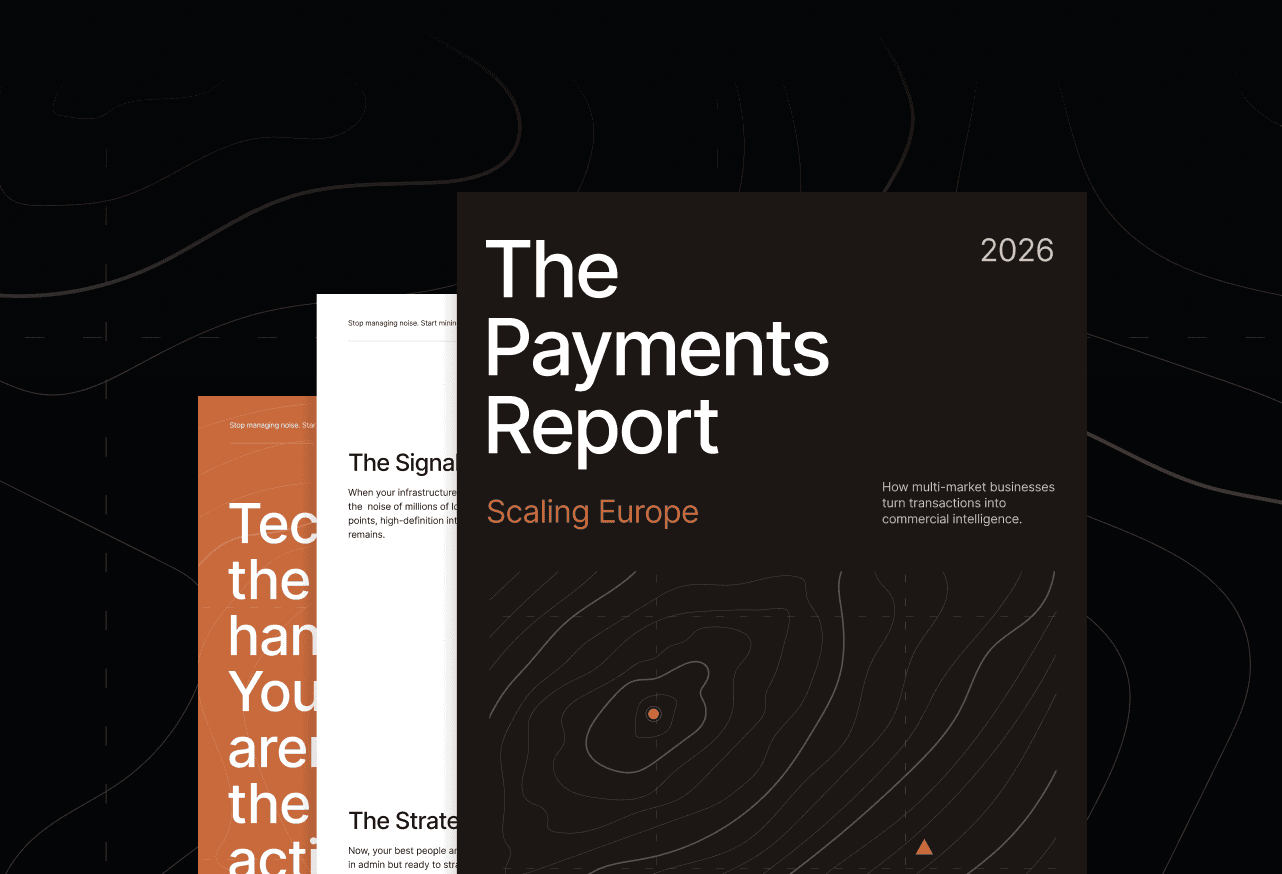
Image showing European Payments Report

The Payments Report 2026

Get the operational playbook to automate complexity and turn transaction data into revenue.

Why the different paths matter

The actions these two paths require from you are completely different. Path 1 is about structuring your data to be discoverable right now. Path 2 is about waiting for security standards to mature before you commit serious resources.

Conflating the two is exactly how you end up ignoring something genuinely useful today, while over-investing in something that isn’t ready yet.

Where to focus

Discovery is the prerequisite

Path 1 and Path 2 are not separate options. They happen in order. Before any AI agent can execute a purchase for a customer, it first has to find your store, read your product data, and trust that the information is accurate.

Discovery is the foundation of any agentic transaction. If an autonomous purchasing agent is given a €50 monthly budget to buy office supplies, but your product data is messy or unstructured, it won’t consider buying from you. Full stop.

This means the work you do today to clean up your inventory data does double duty. It ensures you show up in AI search results right now (Path 1), and it acts as an insurance policy against being completely invisible when autonomous AI checkout (Path 2) eventually matures.

Clean data is the only move that works for both

Apply a simple test to any AI investment you consider today: will this still add value regardless of which protocol wins, or how long autonomous payments take to mature? If the answer is no, your best move is to wait and see.

Clean, highly structured product data passes this test every time.

It makes you discoverable in LLM interfaces right now. It makes the AI search bar on your own website much smarter. And it guarantees that when autonomous AI buyers are finally ready to spend money, they actually know (and trust) what you sell.

Whatever the future of ecommerce looks like, it starts with agents accurately understanding your inventory.

Avoiding the commodity trap

The biggest risk isn’t just being invisible – it’s being reduced to a data point. If a third-party AI steps between you and your buyer, making choices based purely on price and product specs, your brand story and customer service become irrelevant.

The solution is to use AI to improve your direct relationship with the customer. 

Build smart discovery tools and assistants directly into your own website. Make your product data so rich that when external AI assistants do find you, they can actually communicate your true value, not just your price tag.

OpenAI’s recent shift proves this. By positioning ChatGPT as a discovery engine rather than a checkout destination, they confirmed what we already know: your direct relationship with the customer, and your own checkout experience, remain your biggest competitive advantages.

Trust the process, not the hype cycle

At Mollie, we monitor the agentic commerce landscape so you don’t have to. We’re currently running proof-of-concept tests on AI discoverability, monitoring the development of different protocols, and interrogating the real-world implications for fraud detection and chargeback liability. When we tell you a new technology is ready for your checkout, we mean it.

The ‘wow’ factor of AI is real. Autonomous AI agents that shop for your customers and assistants that predict a buyer’s needs are genuinely interesting developments that will – eventually – change how commerce works.

The ‘how’ factor is still being resolved. Security standards, fraud prevention, and data quality are what will determine whether you benefit from these changes or get caught out by them.

Right now, the most important move you can make is to ensure your products are discoverable, your data is clean, and your customer relationships are yours to keep.

Start there. The rest will follow.

Explore the future of commerce

AI is only one part of the shift happening in European retail. To help you navigate what comes next, in The Payments Report 2026 we analyse the data, trends, and regulations that will define the future of commerce

What’s inside The Payments Report 2026:

  • The AI reality: Expert analysis of agentic commerce and how automation delivers value today.

  • The regulatory roadmap: A pragmatic breakdown of PSD3, SEPA Instant, and Wero.

  • Commercial intelligence: How to use transaction data to build richer customer profiles.

  • Exclusive benchmarks: Real European data on digital wallet adoption and fraud trends.

  • Strategic advice: lessons from the frontlines with insights from KPMG and European thought leaders.

Download the report

The Payments Report 2026

Get the operational playbook to automate complexity and turn transaction data into revenue.

More updates

Stay up to date

Never miss an update. Receive product updates, news and customer stories right into your inbox.

Form fields

Table of contents

Table of contents

Partner featured

MollieGrowthAI-powered commerce in 2026: What's ready, what isn't, and where to focus