The best SumUp alternatives for European businesses

Outgrown your card reader? Discover the best SumUp alternatives for growing European businesses. Unify your online and in-store payments with Mollie.

Outgrown your card reader? Discover the best SumUp alternatives for growing European businesses. Unify your online and in-store payments with Mollie.

Christopher Henke

Sales Lead DACH bei Mollie

Blog image showing different terminals

SumUp works well for a market stall, a pop-up, or a solo trader. The setup is simple, the hardware is affordable, and the pricing is easy to understand.

But simplicity has a ceiling. When you start selling across online and in-store channels, when your checkout doesn’t support the payment methods your European customers expect, and when your finance team can’t pull a single unified report, that ceiling becomes a wall.

This article gives you a comprehensive comparison of the main alternatives to SumUp, and a clear guide to which fits your growth path. 

Think of it as a card machine comparison built for businesses that have outgrown entry-level hardware.

SumUp works well for a market stall, a pop-up, or a solo trader. The setup is simple, the hardware is affordable, and the pricing is easy to understand.

But simplicity has a ceiling. When you start selling across online and in-store channels, when your checkout doesn’t support the payment methods your European customers expect, and when your finance team can’t pull a single unified report, that ceiling becomes a wall.

This article gives you a comprehensive comparison of the main alternatives to SumUp, and a clear guide to which fits your growth path. 

Think of it as a card machine comparison built for businesses that have outgrown entry-level hardware.

SumUp works well for a market stall, a pop-up, or a solo trader. The setup is simple, the hardware is affordable, and the pricing is easy to understand.

But simplicity has a ceiling. When you start selling across online and in-store channels, when your checkout doesn’t support the payment methods your European customers expect, and when your finance team can’t pull a single unified report, that ceiling becomes a wall.

This article gives you a comprehensive comparison of the main alternatives to SumUp, and a clear guide to which fits your growth path. 

Think of it as a card machine comparison built for businesses that have outgrown entry-level hardware.

SumUp works well for a market stall, a pop-up, or a solo trader. The setup is simple, the hardware is affordable, and the pricing is easy to understand.

But simplicity has a ceiling. When you start selling across online and in-store channels, when your checkout doesn’t support the payment methods your European customers expect, and when your finance team can’t pull a single unified report, that ceiling becomes a wall.

This article gives you a comprehensive comparison of the main alternatives to SumUp, and a clear guide to which fits your growth path. 

Think of it as a card machine comparison built for businesses that have outgrown entry-level hardware.

What is SumUp?

SumUp’s mission is to solve a specific problem: giving small businesses and sole traders an affordable, friction-free way to accept card payments without lengthy contracts or expensive terminal leases.

The core of SumUp’s offering is its card reader: a compact, portable device that connects to a smartphone or tablet and accepts card payments instantly. It was designed for simplicity, and that simplicity drove rapid adoption across Europe and beyond. 

SumUp’s mission is to solve a specific problem: giving small businesses and sole traders an affordable, friction-free way to accept card payments without lengthy contracts or expensive terminal leases.

The core of SumUp’s offering is its card reader: a compact, portable device that connects to a smartphone or tablet and accepts card payments instantly. It was designed for simplicity, and that simplicity drove rapid adoption across Europe and beyond. 

SumUp’s mission is to solve a specific problem: giving small businesses and sole traders an affordable, friction-free way to accept card payments without lengthy contracts or expensive terminal leases.

The core of SumUp’s offering is its card reader: a compact, portable device that connects to a smartphone or tablet and accepts card payments instantly. It was designed for simplicity, and that simplicity drove rapid adoption across Europe and beyond. 

SumUp’s mission is to solve a specific problem: giving small businesses and sole traders an affordable, friction-free way to accept card payments without lengthy contracts or expensive terminal leases.

The core of SumUp’s offering is its card reader: a compact, portable device that connects to a smartphone or tablet and accepts card payments instantly. It was designed for simplicity, and that simplicity drove rapid adoption across Europe and beyond. 

The pros and cons of using SumUp

Whether you’re already using SumUp or comparing providers for the first time, it’s worth being clear about what it does well and where it falls short. 

The advantages

  • Quick setup with no technical knowledge required

  • Affordable card readers with low acquisition costs

  • Simple flat-rate pricing that’s easy to calculate at low volumes

The disadvantages:

  • Flat-rate fees become expensive as transaction volumes grow

  • Online and in-store sales operate in disconnected silos with no unified reporting

  • Limited integrations with Shopify, WooCommerce, and European ERPs

  • Poor coverage of European local payment methods like iDEAL | Wero, and Bancontact

  • Support that doesn’t scale. Slow response times on critical issues like failed payouts and disputes

  • Transaction fees are hard to compare. SumUp’s flat-rate card machine charges look simple, but the lack of method-dependent pricing means you can’t reduce your blended rate as you scale.

Whether you’re already using SumUp or comparing providers for the first time, it’s worth being clear about what it does well and where it falls short. 

The advantages

  • Quick setup with no technical knowledge required

  • Affordable card readers with low acquisition costs

  • Simple flat-rate pricing that’s easy to calculate at low volumes

The disadvantages:

  • Flat-rate fees become expensive as transaction volumes grow

  • Online and in-store sales operate in disconnected silos with no unified reporting

  • Limited integrations with Shopify, WooCommerce, and European ERPs

  • Poor coverage of European local payment methods like iDEAL | Wero, and Bancontact

  • Support that doesn’t scale. Slow response times on critical issues like failed payouts and disputes

  • Transaction fees are hard to compare. SumUp’s flat-rate card machine charges look simple, but the lack of method-dependent pricing means you can’t reduce your blended rate as you scale.

Whether you’re already using SumUp or comparing providers for the first time, it’s worth being clear about what it does well and where it falls short. 

The advantages

  • Quick setup with no technical knowledge required

  • Affordable card readers with low acquisition costs

  • Simple flat-rate pricing that’s easy to calculate at low volumes

The disadvantages:

  • Flat-rate fees become expensive as transaction volumes grow

  • Online and in-store sales operate in disconnected silos with no unified reporting

  • Limited integrations with Shopify, WooCommerce, and European ERPs

  • Poor coverage of European local payment methods like iDEAL | Wero, and Bancontact

  • Support that doesn’t scale. Slow response times on critical issues like failed payouts and disputes

  • Transaction fees are hard to compare. SumUp’s flat-rate card machine charges look simple, but the lack of method-dependent pricing means you can’t reduce your blended rate as you scale.

Whether you’re already using SumUp or comparing providers for the first time, it’s worth being clear about what it does well and where it falls short. 

The advantages

  • Quick setup with no technical knowledge required

  • Affordable card readers with low acquisition costs

  • Simple flat-rate pricing that’s easy to calculate at low volumes

The disadvantages:

  • Flat-rate fees become expensive as transaction volumes grow

  • Online and in-store sales operate in disconnected silos with no unified reporting

  • Limited integrations with Shopify, WooCommerce, and European ERPs

  • Poor coverage of European local payment methods like iDEAL | Wero, and Bancontact

  • Support that doesn’t scale. Slow response times on critical issues like failed payouts and disputes

  • Transaction fees are hard to compare. SumUp’s flat-rate card machine charges look simple, but the lack of method-dependent pricing means you can’t reduce your blended rate as you scale.

Ready to unify your payments?

Mollie is here to help you bring your online and in-store payments together and scale across Europe

Why growing businesses start looking for a SumUp alternative

There’s usually a specific moment when a SumUp customer starts looking for something else. More often, it’s an accumulation of friction, small inefficiencies that compound as the business grows.

  • Flat-rate fees that made sense at low volume become a margin problem at scale. 

  • Online and offline transactions live in separate systems, turning month-end reconciliation into a manual exercise. 

  • Platform integrations are shallow, so payment data sits outside your operational stack rather than flowing through it. 

  • Support that was fine during onboarding becomes unreliable when you need answers to complex questions. 

  • And when you expand into new European markets, you discover your checkout doesn’t offer the payment methods your customers actually use.

Each friction point is manageable on its own. Together, they signal that you’ve outgrown the tool. For small businesses in the UK, the search for a better card payment machine often starts here, not because SumUp failed, but because the business succeeded.

There’s usually a specific moment when a SumUp customer starts looking for something else. More often, it’s an accumulation of friction, small inefficiencies that compound as the business grows.

  • Flat-rate fees that made sense at low volume become a margin problem at scale. 

  • Online and offline transactions live in separate systems, turning month-end reconciliation into a manual exercise. 

  • Platform integrations are shallow, so payment data sits outside your operational stack rather than flowing through it. 

  • Support that was fine during onboarding becomes unreliable when you need answers to complex questions. 

  • And when you expand into new European markets, you discover your checkout doesn’t offer the payment methods your customers actually use.

Each friction point is manageable on its own. Together, they signal that you’ve outgrown the tool. For small businesses in the UK, the search for a better card payment machine often starts here, not because SumUp failed, but because the business succeeded.

There’s usually a specific moment when a SumUp customer starts looking for something else. More often, it’s an accumulation of friction, small inefficiencies that compound as the business grows.

  • Flat-rate fees that made sense at low volume become a margin problem at scale. 

  • Online and offline transactions live in separate systems, turning month-end reconciliation into a manual exercise. 

  • Platform integrations are shallow, so payment data sits outside your operational stack rather than flowing through it. 

  • Support that was fine during onboarding becomes unreliable when you need answers to complex questions. 

  • And when you expand into new European markets, you discover your checkout doesn’t offer the payment methods your customers actually use.

Each friction point is manageable on its own. Together, they signal that you’ve outgrown the tool. For small businesses in the UK, the search for a better card payment machine often starts here, not because SumUp failed, but because the business succeeded.

There’s usually a specific moment when a SumUp customer starts looking for something else. More often, it’s an accumulation of friction, small inefficiencies that compound as the business grows.

  • Flat-rate fees that made sense at low volume become a margin problem at scale. 

  • Online and offline transactions live in separate systems, turning month-end reconciliation into a manual exercise. 

  • Platform integrations are shallow, so payment data sits outside your operational stack rather than flowing through it. 

  • Support that was fine during onboarding becomes unreliable when you need answers to complex questions. 

  • And when you expand into new European markets, you discover your checkout doesn’t offer the payment methods your customers actually use.

Each friction point is manageable on its own. Together, they signal that you’ve outgrown the tool. For small businesses in the UK, the search for a better card payment machine often starts here, not because SumUp failed, but because the business succeeded.

The main SumUp alternatives

Finding the right alternative to SumUp depends on your business model and goals. There is no single best option for every business. There is, however, a best option for your specific growth path. Below is a comprehensive overview of the

Square and Zettle 

Both operate in the same space as SumUp: compact readers, straightforward pricing, and easy-to-use POS software. 

However, there are certain limits to these payment providers. European local payment method support is thin. Neither platform is built for businesses splitting revenue across online and in-store channels. If your business is strictly physical and you want a better POS experience, either is a reasonable choice. If you’re building an omnichannel operation, both will recreate the same ceiling.

Stripe and Adyen 

Stripe is exceptionally capable, but requires ongoing developer resources to configure and maintain. Adyen is built for global enterprise, with minimum volumes and implementation complexity that put it beyond the reach of most mid-market companies.

Both are the right answer for the right business. Neither is plug-and-play for a European retailer scaling from one location to several while managing a growing online store.

Other alternatives worth knowing

  • myPOS: good for international companies needing standalone, SIM-enabled terminals. 

  • Nexi: reliable hardware for mid-size to large brick-and-mortar retailers, though contract terms can be complex. 

  • Viva Wallet: configurable Android terminals with a free business account.

  • Hobex: straightforward terminals with direct support, focused on physical retail in Germany and Austria. 

  • Unzer: modular, sector-specific solutions for healthcare and mobility businesses. 

  • Novalnet: a comprehensive platform for online retailers with complex requirements. 

  • Payone: full-service POS and online provider with individual contracts. 

  • VR Payment: bank-owned German provider with strong personal support. 

  • CCV: robust terminals for demanding environments; contract terms considered complex.

Each has a legitimate use case. The question is whether that use case matches yours.

Finding the right alternative to SumUp depends on your business model and goals. There is no single best option for every business. There is, however, a best option for your specific growth path. Below is a comprehensive overview of the

Square and Zettle 

Both operate in the same space as SumUp: compact readers, straightforward pricing, and easy-to-use POS software. 

However, there are certain limits to these payment providers. European local payment method support is thin. Neither platform is built for businesses splitting revenue across online and in-store channels. If your business is strictly physical and you want a better POS experience, either is a reasonable choice. If you’re building an omnichannel operation, both will recreate the same ceiling.

Stripe and Adyen 

Stripe is exceptionally capable, but requires ongoing developer resources to configure and maintain. Adyen is built for global enterprise, with minimum volumes and implementation complexity that put it beyond the reach of most mid-market companies.

Both are the right answer for the right business. Neither is plug-and-play for a European retailer scaling from one location to several while managing a growing online store.

Other alternatives worth knowing

  • myPOS: good for international companies needing standalone, SIM-enabled terminals. 

  • Nexi: reliable hardware for mid-size to large brick-and-mortar retailers, though contract terms can be complex. 

  • Viva Wallet: configurable Android terminals with a free business account.

  • Hobex: straightforward terminals with direct support, focused on physical retail in Germany and Austria. 

  • Unzer: modular, sector-specific solutions for healthcare and mobility businesses. 

  • Novalnet: a comprehensive platform for online retailers with complex requirements. 

  • Payone: full-service POS and online provider with individual contracts. 

  • VR Payment: bank-owned German provider with strong personal support. 

  • CCV: robust terminals for demanding environments; contract terms considered complex.

Each has a legitimate use case. The question is whether that use case matches yours.

Finding the right alternative to SumUp depends on your business model and goals. There is no single best option for every business. There is, however, a best option for your specific growth path. Below is a comprehensive overview of the

Square and Zettle 

Both operate in the same space as SumUp: compact readers, straightforward pricing, and easy-to-use POS software. 

However, there are certain limits to these payment providers. European local payment method support is thin. Neither platform is built for businesses splitting revenue across online and in-store channels. If your business is strictly physical and you want a better POS experience, either is a reasonable choice. If you’re building an omnichannel operation, both will recreate the same ceiling.

Stripe and Adyen 

Stripe is exceptionally capable, but requires ongoing developer resources to configure and maintain. Adyen is built for global enterprise, with minimum volumes and implementation complexity that put it beyond the reach of most mid-market companies.

Both are the right answer for the right business. Neither is plug-and-play for a European retailer scaling from one location to several while managing a growing online store.

Other alternatives worth knowing

  • myPOS: good for international companies needing standalone, SIM-enabled terminals. 

  • Nexi: reliable hardware for mid-size to large brick-and-mortar retailers, though contract terms can be complex. 

  • Viva Wallet: configurable Android terminals with a free business account.

  • Hobex: straightforward terminals with direct support, focused on physical retail in Germany and Austria. 

  • Unzer: modular, sector-specific solutions for healthcare and mobility businesses. 

  • Novalnet: a comprehensive platform for online retailers with complex requirements. 

  • Payone: full-service POS and online provider with individual contracts. 

  • VR Payment: bank-owned German provider with strong personal support. 

  • CCV: robust terminals for demanding environments; contract terms considered complex.

Each has a legitimate use case. The question is whether that use case matches yours.

Finding the right alternative to SumUp depends on your business model and goals. There is no single best option for every business. There is, however, a best option for your specific growth path. Below is a comprehensive overview of the

Square and Zettle 

Both operate in the same space as SumUp: compact readers, straightforward pricing, and easy-to-use POS software. 

However, there are certain limits to these payment providers. European local payment method support is thin. Neither platform is built for businesses splitting revenue across online and in-store channels. If your business is strictly physical and you want a better POS experience, either is a reasonable choice. If you’re building an omnichannel operation, both will recreate the same ceiling.

Stripe and Adyen 

Stripe is exceptionally capable, but requires ongoing developer resources to configure and maintain. Adyen is built for global enterprise, with minimum volumes and implementation complexity that put it beyond the reach of most mid-market companies.

Both are the right answer for the right business. Neither is plug-and-play for a European retailer scaling from one location to several while managing a growing online store.

Other alternatives worth knowing

  • myPOS: good for international companies needing standalone, SIM-enabled terminals. 

  • Nexi: reliable hardware for mid-size to large brick-and-mortar retailers, though contract terms can be complex. 

  • Viva Wallet: configurable Android terminals with a free business account.

  • Hobex: straightforward terminals with direct support, focused on physical retail in Germany and Austria. 

  • Unzer: modular, sector-specific solutions for healthcare and mobility businesses. 

  • Novalnet: a comprehensive platform for online retailers with complex requirements. 

  • Payone: full-service POS and online provider with individual contracts. 

  • VR Payment: bank-owned German provider with strong personal support. 

  • CCV: robust terminals for demanding environments; contract terms considered complex.

Each has a legitimate use case. The question is whether that use case matches yours.

Mollie: the European omnichannel upgrade

Mollie is built for European businesses that have outgrown a simple card payment tool and need online and in-store payments to work as a single connected operation without a development team to make it happen.

One dashboard for online and in-store. 

Every transaction from online checkout, in-store terminal, to Tap to Pay, all in one place. Unified reporting, cross-channel refunds, and a single transaction view across all channels. The backend reflects how your business actually operates.

The European payment methods that drive conversion. 

Mollie supports iDEAL | Wero, Bancontact, SEPA Direct Debit, Klarna, and more than 35 payment methods as standard. In markets where a local method is the default checkout choice, this is a conversion decision, not a feature comparison.

Integrations that don’t require a developer. 

Native, plug-and-play integrations with Shopify, WooCommerce, Magento, and more. Connect your store, configure your payment methods, and both channels sync without custom development.

Pricing that scales with your business. No fixed monthly fee.

Method-dependent pricing means your blended rate reflects the actual mix of payments you process. When a meaningful share of your transactions runs through low-cost rails like iDEAL | Wero or SEPA, you stop paying card-rate fees on everything.

Unlike flat card machine rates that penalise growth, Mollie’s method-dependent pricing, with no fixed monthly fee, means your blended cost decreases as more volume flows through lower-cost rails.

Reliable hardware for a smooth checkout

Mollie offers a range of payment terminals that keep the customer-facing experience simple, fast, and professional. The in-store checkout remains easy, but the backend gives you total control.

SoftPOS: Payments on the go

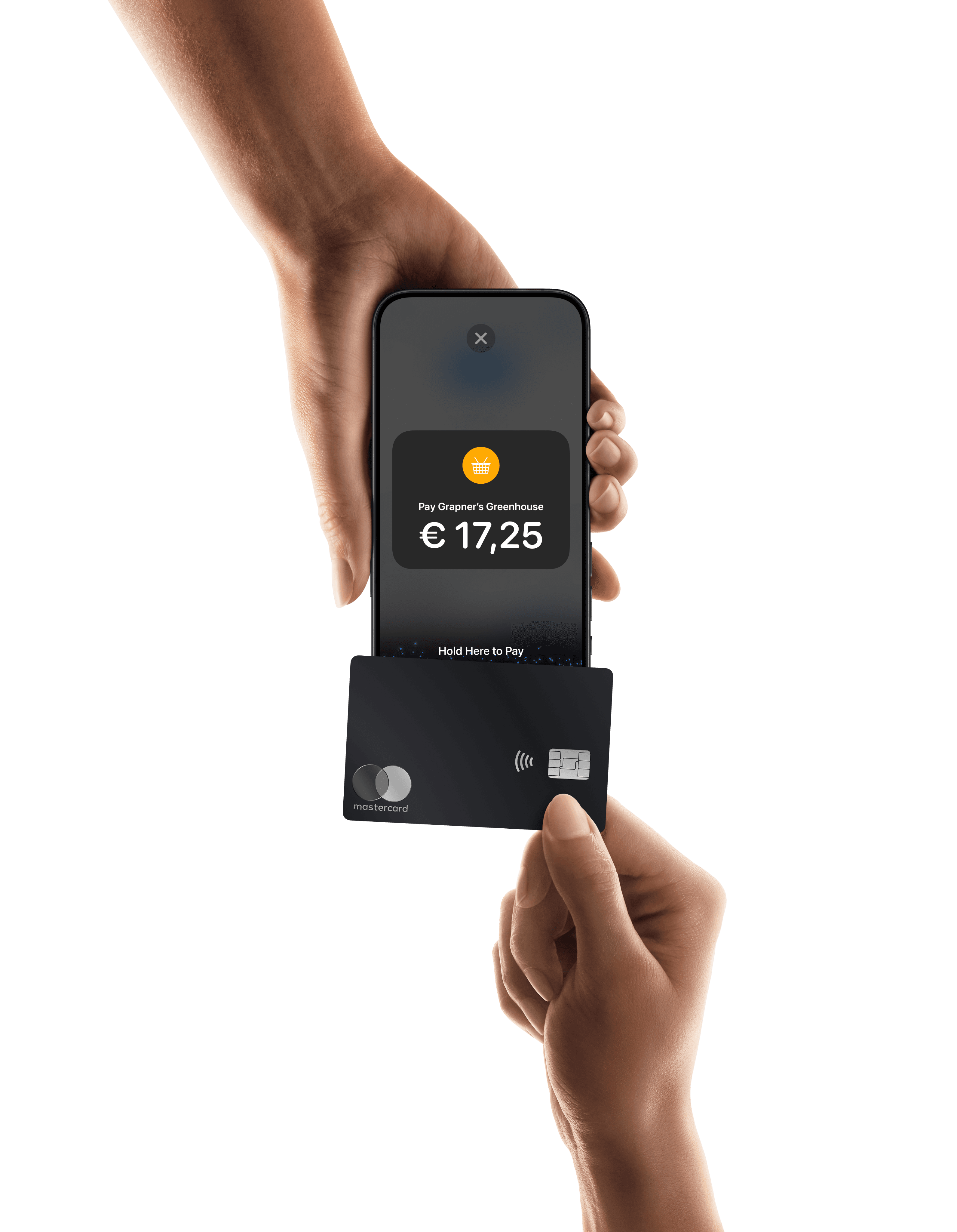
Need to take payments on the shop floor or outside? The Mollie Tap App lets you accept contactless payments directly on your iPhone or Android device. It requires no extra hardware, just the same unified backend.

Mollie is built for European businesses that have outgrown a simple card payment tool and need online and in-store payments to work as a single connected operation without a development team to make it happen.

One dashboard for online and in-store. 

Every transaction from online checkout, in-store terminal, to Tap to Pay, all in one place. Unified reporting, cross-channel refunds, and a single transaction view across all channels. The backend reflects how your business actually operates.

The European payment methods that drive conversion. 

Mollie supports iDEAL | Wero, Bancontact, SEPA Direct Debit, Klarna, and more than 35 payment methods as standard. In markets where a local method is the default checkout choice, this is a conversion decision, not a feature comparison.

Integrations that don’t require a developer. 

Native, plug-and-play integrations with Shopify, WooCommerce, Magento, and more. Connect your store, configure your payment methods, and both channels sync without custom development.

Pricing that scales with your business. No fixed monthly fee.

Method-dependent pricing means your blended rate reflects the actual mix of payments you process. When a meaningful share of your transactions runs through low-cost rails like iDEAL | Wero or SEPA, you stop paying card-rate fees on everything.

Unlike flat card machine rates that penalise growth, Mollie’s method-dependent pricing, with no fixed monthly fee, means your blended cost decreases as more volume flows through lower-cost rails.

Reliable hardware for a smooth checkout

Mollie offers a range of payment terminals that keep the customer-facing experience simple, fast, and professional. The in-store checkout remains easy, but the backend gives you total control.

SoftPOS: Payments on the go

Need to take payments on the shop floor or outside? The Mollie Tap App lets you accept contactless payments directly on your iPhone or Android device. It requires no extra hardware, just the same unified backend.

Mollie is built for European businesses that have outgrown a simple card payment tool and need online and in-store payments to work as a single connected operation without a development team to make it happen.

One dashboard for online and in-store. 

Every transaction from online checkout, in-store terminal, to Tap to Pay, all in one place. Unified reporting, cross-channel refunds, and a single transaction view across all channels. The backend reflects how your business actually operates.

The European payment methods that drive conversion. 

Mollie supports iDEAL | Wero, Bancontact, SEPA Direct Debit, Klarna, and more than 35 payment methods as standard. In markets where a local method is the default checkout choice, this is a conversion decision, not a feature comparison.

Integrations that don’t require a developer. 

Native, plug-and-play integrations with Shopify, WooCommerce, Magento, and more. Connect your store, configure your payment methods, and both channels sync without custom development.

Pricing that scales with your business. No fixed monthly fee.

Method-dependent pricing means your blended rate reflects the actual mix of payments you process. When a meaningful share of your transactions runs through low-cost rails like iDEAL | Wero or SEPA, you stop paying card-rate fees on everything.

Unlike flat card machine rates that penalise growth, Mollie’s method-dependent pricing, with no fixed monthly fee, means your blended cost decreases as more volume flows through lower-cost rails.

Reliable hardware for a smooth checkout

Mollie offers a range of payment terminals that keep the customer-facing experience simple, fast, and professional. The in-store checkout remains easy, but the backend gives you total control.

SoftPOS: Payments on the go

Need to take payments on the shop floor or outside? The Mollie Tap App lets you accept contactless payments directly on your iPhone or Android device. It requires no extra hardware, just the same unified backend.

Mollie is built for European businesses that have outgrown a simple card payment tool and need online and in-store payments to work as a single connected operation without a development team to make it happen.

One dashboard for online and in-store. 

Every transaction from online checkout, in-store terminal, to Tap to Pay, all in one place. Unified reporting, cross-channel refunds, and a single transaction view across all channels. The backend reflects how your business actually operates.

The European payment methods that drive conversion. 

Mollie supports iDEAL | Wero, Bancontact, SEPA Direct Debit, Klarna, and more than 35 payment methods as standard. In markets where a local method is the default checkout choice, this is a conversion decision, not a feature comparison.

Integrations that don’t require a developer. 

Native, plug-and-play integrations with Shopify, WooCommerce, Magento, and more. Connect your store, configure your payment methods, and both channels sync without custom development.

Pricing that scales with your business. No fixed monthly fee.

Method-dependent pricing means your blended rate reflects the actual mix of payments you process. When a meaningful share of your transactions runs through low-cost rails like iDEAL | Wero or SEPA, you stop paying card-rate fees on everything.

Unlike flat card machine rates that penalise growth, Mollie’s method-dependent pricing, with no fixed monthly fee, means your blended cost decreases as more volume flows through lower-cost rails.

Reliable hardware for a smooth checkout

Mollie offers a range of payment terminals that keep the customer-facing experience simple, fast, and professional. The in-store checkout remains easy, but the backend gives you total control.

SoftPOS: Payments on the go

Need to take payments on the shop floor or outside? The Mollie Tap App lets you accept contactless payments directly on your iPhone or Android device. It requires no extra hardware, just the same unified backend.

Mollie vs SumUp: a comparison

If you’re actively weighing the two platforms, here’s how they compare across the criteria that matter most at scale.


Mollie

SumUp

POS flexibility

Fully integrated into the dashboard, mobile, and stationary

Compact terminals; limited customisation

Omnichannel capability

Unified online and in-store; shared reporting and cross-channel refunds

Basic online/offline links; limited cross-channel depth

European payment methods

35+ including iDEAL, Bancontact, SEPA, Klarna

Limited local method coverage

Fee model

Method-dependent; no fixed monthly fee

Flat-rate per transaction

Platform integrations

Native: Shopify, WooCommerce, Magento and more

Limited integration depth

Support quality

Personalised and localised support

Onboarding and ongoing support

SumUp is the right starting point if you’re looking for simplicity above all else. When the priority shifts to cross-channel operations, European market coverage, and a payment system that fits inside your tech stack rather than alongside it, Mollie is the more capable platform.

If you’re actively weighing the two platforms, here’s how they compare across the criteria that matter most at scale.


Mollie

SumUp

POS flexibility

Fully integrated into the dashboard, mobile, and stationary

Compact terminals; limited customisation

Omnichannel capability

Unified online and in-store; shared reporting and cross-channel refunds

Basic online/offline links; limited cross-channel depth

European payment methods

35+ including iDEAL, Bancontact, SEPA, Klarna

Limited local method coverage

Fee model

Method-dependent; no fixed monthly fee

Flat-rate per transaction

Platform integrations

Native: Shopify, WooCommerce, Magento and more

Limited integration depth

Support quality

Personalised and localised support

Onboarding and ongoing support

SumUp is the right starting point if you’re looking for simplicity above all else. When the priority shifts to cross-channel operations, European market coverage, and a payment system that fits inside your tech stack rather than alongside it, Mollie is the more capable platform.

If you’re actively weighing the two platforms, here’s how they compare across the criteria that matter most at scale.


Mollie

SumUp

POS flexibility

Fully integrated into the dashboard, mobile, and stationary

Compact terminals; limited customisation

Omnichannel capability

Unified online and in-store; shared reporting and cross-channel refunds

Basic online/offline links; limited cross-channel depth

European payment methods

35+ including iDEAL, Bancontact, SEPA, Klarna

Limited local method coverage

Fee model

Method-dependent; no fixed monthly fee

Flat-rate per transaction

Platform integrations

Native: Shopify, WooCommerce, Magento and more

Limited integration depth

Support quality

Personalised and localised support

Onboarding and ongoing support

SumUp is the right starting point if you’re looking for simplicity above all else. When the priority shifts to cross-channel operations, European market coverage, and a payment system that fits inside your tech stack rather than alongside it, Mollie is the more capable platform.

If you’re actively weighing the two platforms, here’s how they compare across the criteria that matter most at scale.


Mollie

SumUp

POS flexibility

Fully integrated into the dashboard, mobile, and stationary

Compact terminals; limited customisation

Omnichannel capability

Unified online and in-store; shared reporting and cross-channel refunds

Basic online/offline links; limited cross-channel depth

European payment methods

35+ including iDEAL, Bancontact, SEPA, Klarna

Limited local method coverage

Fee model

Method-dependent; no fixed monthly fee

Flat-rate per transaction

Platform integrations

Native: Shopify, WooCommerce, Magento and more

Limited integration depth

Support quality

Personalised and localised support

Onboarding and ongoing support

SumUp is the right starting point if you’re looking for simplicity above all else. When the priority shifts to cross-channel operations, European market coverage, and a payment system that fits inside your tech stack rather than alongside it, Mollie is the more capable platform.

Which SumUp alternative is right for you?

The answer is that it depends on where your business is headed, not just where it is today. 

  • Small catering businesses like café, food truck, or strictly offline retail: Square or Zettle

  • Developer-led SaaS or global enterprise: Stripe or Adyen

  • Physical retail in Germany or Austria: Hobex or VR Payment

  • European retailer scaling online and in-store: Mollie

  • UK small businesses looking for the best card reader without locking into a contract: start with Square or Zettle, then move to Mollie when you add online sales.

Ready to unify your payments?

Upgrading your payment provider isn’t more than simply getting a new card reader; it’s about fixing your operational backend and setting your business up to scale. If you are ready to bring your online and in-store payments together and scale across Europe, Mollie is here to help. Explore our omnichannel payments solution, or speak to an expert about unifying your channels today.

FAQ: SumUp and Mollie

Which is better: SumUp or Mollie?

SumUp suits simple, low-volume in-person payments. Mollie is better for businesses selling across online and in-store channels that need European local payment methods, platform integrations, and unified reporting.

How high are SumUp’s fees, and how do they compare at scale?

The flat rate works at low volumes but becomes costly at scale. Mollie’s method-dependent pricing means your blended rate decreases as more transactions are routed through lower-cost rails like iDEAL or SEPA.

Does SumUp work with an online shop?

Partially. SumUp offers a shop builder and a WooCommerce plugin, but online and in-store systems operate separately. Reporting isn’t unified, and cross-channel functionality is limited.

Which bank is behind SumUp?

SumUp is a registered payment institution, not a bank. It operates under SumUp Limited in the UK and is supervised by BaFin in Germany.

Can I use Mollie as a card reader for in-person payments?

Yes. Mollie offers a range of purpose-built terminals, and the Mollie Tap App supports Tap to Pay on iPhone and Android. Also, with Mollie, all in-person transactions appear in the same dashboard as your online payments.

Does Mollie support European local payment methods like iDEAL | Wero, and Bancontact?

Yes. Mollie natively supports more than 35 payment methods, including iDEAL, Bancontact, SEPA Direct Debit, and Klarna. These are built into the platform as standard.

Do I need a developer to switch from SumUp to Mollie?

No. Mollie’s integrations with Shopify, WooCommerce, and Magento are plug-and-play. No custom development required.

How do I compare card machines for my business?

Start with three factors: transaction fees, payment method coverage, and whether online and in-store sales are unified. A card machine comparison based on hardware alone misses the real cost drivers. Mollie’s comparison approach accounts for method-dependent pricing, so you’re evaluating the total cost of payment acceptance, not just the reader's price.

What is the cheapest card payment machine in the UK?

Entry-level readers from SumUp, Square, and Zettle start at around £19–£59. But the cheapest card machine isn’t always the lowest-cost option. Transaction fees, lack of local payment methods, and manual reconciliation across channels add hidden costs. Mollie’s Tap App requires no hardware purchase.

More updates

Stay up to date

Never miss an update. Receive product updates, news and customer stories right into your inbox.

Form fields

Table of contents

Table of contents

Partner featured

MollieGrowthThe best SumUp alternatives for European businesses