E-invoicing in Europe: What businesses need to know

Learn what structured European e-invoicing means for your business, explore the 2026 timelines, and discover how to automate compliance with Mollie.

Learn what structured European e-invoicing means for your business, explore the 2026 timelines, and discover how to automate compliance with Mollie.

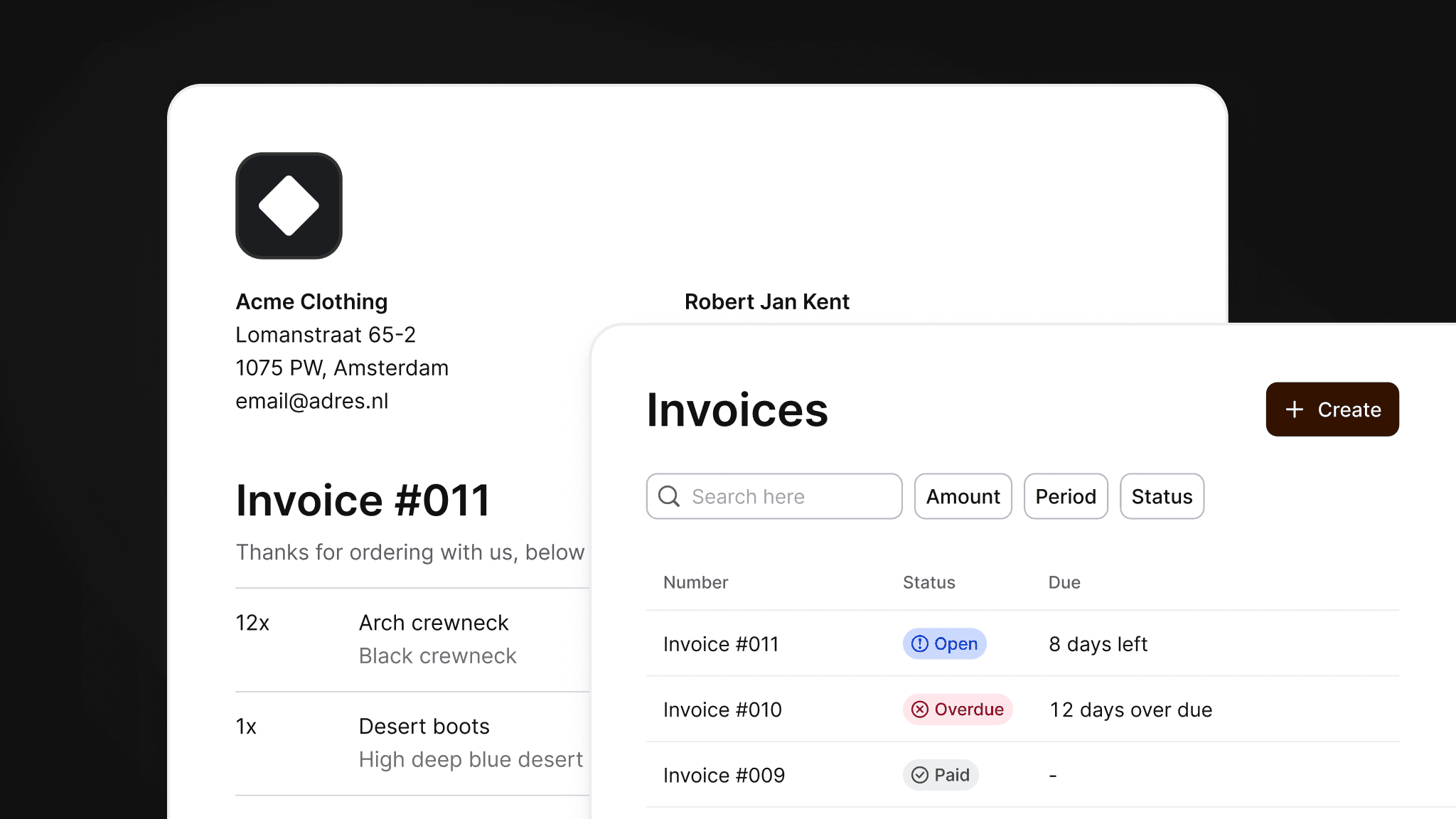
blog banner showing Mollie e-invocing

Across the continent, governments are moving away from PDFs and toward structured e-invoicing. This isn’t just a technical upgrade; it’s a shift in how businesses and tax authorities communicate. This transition is designed to provide tax authorities with real-time visibility into transactions, replacing manual reporting with a digitised, machine-readable system of record.

For businesses, this represents a move toward a more integrated digital economy. 

In this guide, we will break down what structured e-invoicing is, explore the shifting regulatory timelines in countries such as the Netherlands, Belgium, and Germany, and outline how to prepare your operations for the mandatory transition. Whether you are based in Brussels, Berlin, or Paris, the era of machine-readable finance has arrived.

What is e-invoicing?

Let’s start by clearing up the biggest misconception first: a PDF sent via email is not an e-invoice.

While a PDF is electronic, it isn’t ‘structured’. To a computer, a PDF is just a digital image of a piece of paper. If you want to get the data into your accounting system, you still need a human to type it in, or an OCR (Optical Character Recognition) tool to guess where the total amount and VAT number are. Both methods are prone to errors and delays.

A true e-invoice is a data file, usually in XML format, created so that the receiver’s accounting software can read, validate, and process it automatically without any human intervention. It contains the same information as a traditional invoice, but in a structured format that follows a specific technical standard.

How does e-invoicing work?

The e-invoicing process involves three main components: the format, the network, and the end-to-end automation.

  1. The format: In Europe, the standard is EN 16931. This ensures that every e-invoice contains the mandatory fields required by law in a way that every compliant system can understand. Common formats include UBL (Universal Business Language) and UN/CEFACT CII.

  2. The network: Most European countries use the Peppol network. Think of Peppol as a secure, dedicated postal service for digital business documents. Instead of emailing a file, you send the data through an access point.

  3. The transmission: When you click send, your invoicing provider (the access point) validates the invoice data, converts it into the correct format, and delivers it directly to the receiver’s access point. The receiver’s software then automatically ingests the data.

The role of Peppol

To make e-invoicing work across borders, we need a common language and a secure delivery route. This is where Peppol (Pan-European Public Procurement On-Line) comes in. It is not a software platform itself, but a set of technical specifications and a network of certified providers.

By using a Peppol access point through your invoicing provider, like Mollie, you can reach any other business or government entity on the network, regardless of what internal accounting software they use. It eliminates the need for one-to-one connections between every supplier and customer.

What are the benefits of e-invoicing?

Governments are driving this change to close the VAT gap – the difference between the VAT expected and the VAT actually collected. Every year, billions in tax revenue are lost to errors, manual mistakes, and fraud. By requiring structured electronic invoicing, tax authorities get real-time visibility into transactions, often referred to as digital reporting.

However, for busy finance managers or business owners, the benefits are much more grounded in operational reality.

Faster payments and improved cash flow

When an invoice is sent as structured data, it bypasses the manual queue. It doesn’t sit in an unread inbox or get stuck in a spam filter. Instead, It lands directly in the recipient’s accounting system, often triggering the approval workflow immediately. This significantly reduces the Days Sales Outstanding (DSO) and ensures money stays in your business rather than being locked in an administrative bottleneck.

Eliminating manual errors

Manual data entry is one of the highest hidden costs in finance operations. Whether it’s a typo in a bank account number or a misplaced decimal point in a VAT calculation, these small errors can lead to false declines, rejected payments, and hours of manual reconciliation. E-invoicing fixes this by ensuring that the data sent is exactly the same as the data received.

Lower operational costs

Printing, posting, and manually archiving paper invoices, or even manually managing thousands of PDFs, is expensive. When you calculate the hourly rate of a finance professional, the cost of a single invoice can be surprisingly high. E-invoicing allows your team to focus on higher-value tasks, such as strategic planning and treasury management, rather than on data entry.

Enhanced security and compliance

E-invoices sent through the Peppol network are encrypted and sent through verified access points. This reduces the risk of invoice fraud, such as intercepted emails in which bank details are altered by malicious actors. Furthermore, using a compliant e-invoicing solution ensures you automatically meet the evolving legal requirements in every country where you operate.

Where is e-invoicing mandatory?

The ultimate goal of the EU’s ViDA (VAT in the Digital Age) proposal aims to create a unified system for all intra-EU trade by 2030. However, this is being rolled out in a phased approach, so understanding the local nuances is critical for businesses operating across borders.

Belgium: The frontrunner

Belgium is leading the charge in Western Europe. As of 1 January 2026, structured e-invoicing is mandatory for all B2B transactions in Belgium.

This is a significant change. If you are a Belgian business billing another Belgian business, you must use the Peppol network. A PDF is no longer acceptable. The Belgian government has been clear: the goal is to make e-invoicing the default for the entire economy, not just for those dealing with the public sector.

Germany: A phased rollout

Germany is moving toward a mandatory model with a focus on readiness.

  • 1 January 2025: All German businesses must be able to receive e-invoices. This means even if you aren’t sending them yet, your systems must be capable of reading and processing structured data from suppliers who are.

  • 2027 – 2028: The mandate to send e-invoices will roll out in stages. Larger companies with high turnover will be required to switch first, with small and medium-sized enterprises following shortly after.

This phased approach is designed to give the German business community time to fix the engine of their legacy systems without causing widespread disruption.

France: A robust framework

France has a long history of e-government services, and its B2B mandate is particularly ambitious. The current timeline suggests a phased rollout starting in September 2026.

France uses a Y-model. This means businesses can send invoices through a central government portal (Chorus Pro) or through private, certified platforms known as Plateformes de Dématérialisation Partenaires (PDP). This ensures that even small businesses have multiple routes to compliance.

The Netherlands: Momentum is building

Currently, e-invoicing in the Netherlands is mandatory for B2G (business-to-government) transactions. While there is no immediate mandate for B2B transactions yet, the Dutch government is a strong supporter of the Peppol network. Many Dutch businesses are already voluntarily switching to e-invoicing to benefit from automation and prepare for the inevitable EU-wide requirements.

EU-wide: ViDA and the 2030 outlook

The European Commission’s VAT in the Digital Age (ViDA) initiative is the north star for all of these local mandates. By 2030, the goal is a unified system for intra-EU trade.

ViDA will replace the current, somewhat archaic system of recapitulative statements with real-time digital reporting based on e-invoicing. This will mean that a business in Amsterdam selling to a client in Munich will use the same structured data standard, making cross-border trade as simple as local trade. The move toward 2030 is designed to ensure that the European single market remains competitive in an increasingly digital global economy.

How your business can prepare for e-invoicing

We know that compliance often feels like an extra tax on your time. However, the shift to e-invoicing is an opportunity to move away from spreadsheets and manual batch files toward a more modern, automated stack. Here’s how you can get started:

Audit your current stack

The first step is to look at your current billing and accounting software. Does it actually support structured formats like Factur-X or Peppol BIS 3.0? 

Many legacy systems only spit out PDFs, so if your current provider doesn’t have a roadmap for e-invoicing compliance, it’s time to look for a more future-proof partner.

Check your data quality

Machine-readable invoicing requires high-quality data. Humans can often figure out a typo in an address or a missing VAT number, but a Peppol access point might reject the invoice immediately. 

Ensure your customer master data is clean, up to date, and includes the necessary identifiers (like the GLN or VAT number).

Don’t wait for the deadline

The mad scramble is a real risk. As deadlines approach in 2026 and 2027, many software providers and consultants will be overstretched.

Transitioning early allows you to iron out any kinks in your workflow, train your staff, and communicate with your customers before the tax office starts looking over your shoulder.

Consider an API-first approach

If you handle high volumes or have a complex business model, manual entry into a dashboard isn’t sustainable.

Integrating e-invoicing directly into your backend via an API is the only way to scale without adding significant headcount. This allows you to generate, send, and track invoices within your existing checkout or order management flow.

Start sending e-invoices with Mollie

We believe that staying compliant shouldn’t be expensive or complicated. Our role is to bridge the gap between complex financial technology and the operational reality of your business. That’s why we’ve built e-invoicing capabilities directly into Mollie.

Whether you use the Mollie Dashboard or our Sales Invoices API, you can send structured e-invoices via the Peppol network today. We handle all the technical heavy lifting – registering you in the relevant network, converting your billing data into the required XML format and routing it securely to your customer’s access point.

Why use Mollie for e-invoicing?

  • Available immediately: We already support e-invoicing in the Netherlands, Belgium, and Germany.

  • Compliance by default: We stay on top of the changing regulations across Europe so you don’t have to. When a new mandate is announced or a technical standard changes, we automatically update our systems.

  • No hidden costs: Mollie Invoicing is completely free for users, so does sending sending e-invoice. We want to help our merchants grow by removing the barriers to digital trade.

  • Unified payments and billing: By using Mollie for both your payments and your invoicing, you get a single source of truth for your revenue. This makes reconciliation faster and your reporting more accurate.

By activating Mollie Invoicing, you’re future-proofing your business. It’s an easy way to ensure that your Belgian, German or Dutch customers receive their invoices in the format they need to stay compliant.

Learn more about e-invoicing with Mollie

Receiving e-invoices from Mollie (Belgium only)

For Belgian businesses, we go a step further and allow you to receive your own monthly Mollie invoices via Peppol. We're also expanding such support to other European markets as e-invoicing regulations evolve.

This is a key feature to save time in your financial process: when you enable this, your Mollie costs flow directly into your accounting software. There is no need for a finance manager to log into a dashboard, download a PDF, and manually process the invoice. The data is already there, ready for reconciliation and tax reporting. 

To set this up, you can simply enable “Receive Mollie e-invoices” in your Mollie Organization Settings or follow the steps in our help centre.

Future-proof your invoicing

The shift to e-invoicing is part of a larger trend: the digitisation of the European economy. While the transition might feel like another administrative hurdle, it’s actually an opportunity to fix the engine of your finance department, allowing you to reduce the risk of false declines, speed up your payment cycles, and ensure you stay ahead of the regulatory curve.

The momentum across Europe is only going one way. Whether it’s the immediate requirements in Belgium or ViDA’s long-term vision for 2030, structured data is the future of trade. Preparing today ensures that when the next deadline arrives, your business won’t skip a beat.

Let Mollie help you implement e-invoicing smoothly

FAQs on e-invoicing

Is a PDF an e-invoice?

No. A PDF is considered an electronic image. While it can be sent electronically, it does not meet the legal requirements for structured e-invoicing because it cannot be automatically processed by the receiver's system without data extraction tools. Under the new European mandates, an e-invoice must be a structured, machine-readable data file like XML.

What is the Peppol network?

Peppol is a secure international network that allows businesses to exchange electronic documents (like invoices and purchase orders) with anyone else on the network, regardless of what software they use. It operates like a roaming network for mobile phones; as long as you have an access point, you can connect to anyone else.

Does Mollie charge for e-invoicing?

Sending structured e-invoices is a feature of Mollie Invoicing, and both are free. We aim to provide this at no extra cost to help you stay compliant and efficient.  

Which countries are supported?

Currently, you can send e-invoices via Mollie if your business is based in the Netherlands, Belgium, or Germany. We are constantly expanding our support as more European markets move toward mandatory e-invoicing.

How do I start?

If you’re already using Mollie, you can head to your Mollie Dashboard settings to see your invoicing options. For those who want to automate at scale, our Sales Invoices API documentation provides everything your developers need to integrate e-invoicing into your existing systems. If you want a step-by-step guide on how to send e-invoices using Mollie, check out our help article

More updates

Stay up to date

Never miss an update. Receive product updates, news and customer stories right into your inbox.

Form fields

Table of contents

Table of contents

MollieGrowthE-invoicing in Europe: What businesses need to know