
Tap to Pay on iPhone
Accept contactless payments right on your iPhone with the Mollie app
Accept payments
Technical resources
About Mollie
Tap to Pay on iPhone
Accept contactless payments right on your iPhone with the Mollie app
Accept payments
Technical resources
About Mollie
How BENU Farma turned its ecommerce into a marketplace in record time with Mollie
A physical pharmacy can only sell what fits on its shelves, but with a marketplace, everything changes. Discover how BENU Farma overcame this limit by opening its Italian ecommerce to third-party sellers, relying on Mollie to manage every payment flow.
A physical pharmacy can only sell what fits on its shelves, but with a marketplace, everything changes. Discover how BENU Farma overcame this limit by opening its Italian ecommerce to third-party sellers, relying on Mollie to manage every payment flow.
Health & Beauty
Partner: Agency
100 sellers
100 sellers
100 sellers
onboarded in just 7 months
2 working days
2 working days
2 working days
for sellers to complete KYC

" height="9px" id="pL3PXF39e" transform="translate(9 9)" width="39px"/></svg>)

“In a marketplace, how quickly you can activate a seller is the whole game. KYC with Mollie is the easiest stage of the journey. It's taken weeks out of our onboarding, and it's why we're ahead of where we expected to be.”
Diego Fiordi, Head of Marketplace at BENU Farma
A pharmacy can only sell what fits on its shelves.
That’s fine for everyday health and beauty products. It becomes a real limit when a customer wants a specialist veterinary treatment, an orthopaedic support, or a piece of home care equipment. Going online helps less than you’d expect, because you still have to buy that stock upfront, store it, and accept that some of it won’t sell.
There’s another way to widen the product range: let other retailers sell their products on your website, and take a commission on each sale. That’s a marketplace, and it turns a shop into a platform.
It also changes what happens when someone pays. Say a customer buys two things in one basket, one of yours and one from another seller. That single payment now has to reach two different companies, split correctly, with the invoicing handled for both. Add a few hundred sellers, each needing identity checks and a payout schedule before they can list anything, and you’re running a small financial operation. The payment system behind an ordinary online shop can’t do that, because it’s built to send money to one place.
That was the problem BENU Farma had to solve before its marketplace could open.
About BENU Farma
BENU Farma is a leading name in Italy’s health and wellness sector. Part of the Phoenix Group – a European powerhouse with €61 billion in revenue – the brand runs around 1,000 pharmacies across Italy, spanning company-owned, franchise and affiliate stores, alongside 25 logistics distribution centres. With its own digital channel growing fast (+75% year on year), the company had to move quickly to keep pace with competitors in an increasingly crowded market.
BENU Farma’s goal is clear: to transition to a marketplace open to third-party sellers while expanding into underserved categories like veterinary products, medical devices, and home care.
A pharmacy can only sell what fits on its shelves.
That’s fine for everyday health and beauty products. It becomes a real limit when a customer wants a specialist veterinary treatment, an orthopaedic support, or a piece of home care equipment. Going online helps less than you’d expect, because you still have to buy that stock upfront, store it, and accept that some of it won’t sell.
There’s another way to widen the product range: let other retailers sell their products on your website, and take a commission on each sale. That’s a marketplace, and it turns a shop into a platform.
It also changes what happens when someone pays. Say a customer buys two things in one basket, one of yours and one from another seller. That single payment now has to reach two different companies, split correctly, with the invoicing handled for both. Add a few hundred sellers, each needing identity checks and a payout schedule before they can list anything, and you’re running a small financial operation. The payment system behind an ordinary online shop can’t do that, because it’s built to send money to one place.
That was the problem BENU Farma had to solve before its marketplace could open.
About BENU Farma
BENU Farma is a leading name in Italy’s health and wellness sector. Part of the Phoenix Group – a European powerhouse with €61 billion in revenue – the brand runs around 1,000 pharmacies across Italy, spanning company-owned, franchise and affiliate stores, alongside 25 logistics distribution centres. With its own digital channel growing fast (+75% year on year), the company had to move quickly to keep pace with competitors in an increasingly crowded market.
BENU Farma’s goal is clear: to transition to a marketplace open to third-party sellers while expanding into underserved categories like veterinary products, medical devices, and home care.
A pharmacy can only sell what fits on its shelves.
That’s fine for everyday health and beauty products. It becomes a real limit when a customer wants a specialist veterinary treatment, an orthopaedic support, or a piece of home care equipment. Going online helps less than you’d expect, because you still have to buy that stock upfront, store it, and accept that some of it won’t sell.
There’s another way to widen the product range: let other retailers sell their products on your website, and take a commission on each sale. That’s a marketplace, and it turns a shop into a platform.
It also changes what happens when someone pays. Say a customer buys two things in one basket, one of yours and one from another seller. That single payment now has to reach two different companies, split correctly, with the invoicing handled for both. Add a few hundred sellers, each needing identity checks and a payout schedule before they can list anything, and you’re running a small financial operation. The payment system behind an ordinary online shop can’t do that, because it’s built to send money to one place.
That was the problem BENU Farma had to solve before its marketplace could open.
About BENU Farma
BENU Farma is a leading name in Italy’s health and wellness sector. Part of the Phoenix Group – a European powerhouse with €61 billion in revenue – the brand runs around 1,000 pharmacies across Italy, spanning company-owned, franchise and affiliate stores, alongside 25 logistics distribution centres. With its own digital channel growing fast (+75% year on year), the company had to move quickly to keep pace with competitors in an increasingly crowded market.
BENU Farma’s goal is clear: to transition to a marketplace open to third-party sellers while expanding into underserved categories like veterinary products, medical devices, and home care.
“The pharmaceutical and wellness market has always been tied to the physical space of the traditional pharmacy. Moving towards a marketplace model was born out of the need to overcome that limit: it lets us broaden our range into less common categories, respond to competitors with agility, and offer customers a complete selection of products – all while trust in the BENU brand stays at the centre.”
Federico De Santo, Digital Commerce Director at BENU Farma
The challenge
To build the marketplace, BENU Farma set up an advanced technology architecture – but soon found itself managing a double obstacle. On the one hand, standard payment systems weren’t built to support the pay-in and pay-out logic that a multi-seller ecosystem requires. On the other, a bureaucratic barrier emerged: the foreign financial solution the technical partner had initially selected ran into the head office’s complex approval workflows, creating a genuine operational deadlock.
“We found ourselves in a highly critical situation just a few weeks before the official launch. The original provider’s solution came with bureaucratic requirements that were too restrictive for a complex multinational like ours. Mollie stepped in during this emergency and showed extraordinary flexibility: in a matter of weeks, it took the project on, finalised the configuration and unblocked the launch,” remarked Federico De Santo.
With just weeks to go before the official December launch, the project was at risk of a serious delay to its go-live date. This is where Mollie stepped in mid-project: replacing the previous provider right up against the deadline, it reworked the technical and administrative setup in record time to save the go-live date.
It’s a tailored approach that Alessia Fanfoni, Business Development Manager at Mollie, confirmed:
“The corporate structure of a large group demands a level of compliance and flexibility that standard systems and traditional providers simply can’t offer. When we stepped in just weeks before go-live, the urgency was at its peak. We worked hand in hand with the BENU Farma team to redesign a bespoke administrative flow from scratch that unlocked the situation in record time.”
On the technical side, the speed of execution was made possible by close collaboration with SpotView, which arranged the integration of Mollie into the marketplace architecture:
“The marketplace rests on a three-system architecture – Shopify Plus, Mirakl and the payment layer – and standard connectors don’t always cover 100% of the flows you need. As the system integrator, together with Phoenix, Mirakl and BENU, we mapped the end-to-end integrations and built the parts that the Mollie-Shopify and Mollie-Mirakl connectors didn’t cover. What made the difference was the technical team Mollie put at our disposal: direct, knowledgeable contacts who kept the collaboration running smoothly even on such a compressed timeline,” says Lorenzo Baldi, COO of SpotView, Shopify Plus Partner and system integrator on the project.
The challenge
To build the marketplace, BENU Farma set up an advanced technology architecture – but soon found itself managing a double obstacle. On the one hand, standard payment systems weren’t built to support the pay-in and pay-out logic that a multi-seller ecosystem requires. On the other, a bureaucratic barrier emerged: the foreign financial solution the technical partner had initially selected ran into the head office’s complex approval workflows, creating a genuine operational deadlock.
“We found ourselves in a highly critical situation just a few weeks before the official launch. The original provider’s solution came with bureaucratic requirements that were too restrictive for a complex multinational like ours. Mollie stepped in during this emergency and showed extraordinary flexibility: in a matter of weeks, it took the project on, finalised the configuration and unblocked the launch,” remarked Federico De Santo.
With just weeks to go before the official December launch, the project was at risk of a serious delay to its go-live date. This is where Mollie stepped in mid-project: replacing the previous provider right up against the deadline, it reworked the technical and administrative setup in record time to save the go-live date.
It’s a tailored approach that Alessia Fanfoni, Business Development Manager at Mollie, confirmed:
“The corporate structure of a large group demands a level of compliance and flexibility that standard systems and traditional providers simply can’t offer. When we stepped in just weeks before go-live, the urgency was at its peak. We worked hand in hand with the BENU Farma team to redesign a bespoke administrative flow from scratch that unlocked the situation in record time.”
On the technical side, the speed of execution was made possible by close collaboration with SpotView, which arranged the integration of Mollie into the marketplace architecture:
“The marketplace rests on a three-system architecture – Shopify Plus, Mirakl and the payment layer – and standard connectors don’t always cover 100% of the flows you need. As the system integrator, together with Phoenix, Mirakl and BENU, we mapped the end-to-end integrations and built the parts that the Mollie-Shopify and Mollie-Mirakl connectors didn’t cover. What made the difference was the technical team Mollie put at our disposal: direct, knowledgeable contacts who kept the collaboration running smoothly even on such a compressed timeline,” says Lorenzo Baldi, COO of SpotView, Shopify Plus Partner and system integrator on the project.
The challenge
To build the marketplace, BENU Farma set up an advanced technology architecture – but soon found itself managing a double obstacle. On the one hand, standard payment systems weren’t built to support the pay-in and pay-out logic that a multi-seller ecosystem requires. On the other, a bureaucratic barrier emerged: the foreign financial solution the technical partner had initially selected ran into the head office’s complex approval workflows, creating a genuine operational deadlock.
“We found ourselves in a highly critical situation just a few weeks before the official launch. The original provider’s solution came with bureaucratic requirements that were too restrictive for a complex multinational like ours. Mollie stepped in during this emergency and showed extraordinary flexibility: in a matter of weeks, it took the project on, finalised the configuration and unblocked the launch,” remarked Federico De Santo.
With just weeks to go before the official December launch, the project was at risk of a serious delay to its go-live date. This is where Mollie stepped in mid-project: replacing the previous provider right up against the deadline, it reworked the technical and administrative setup in record time to save the go-live date.
It’s a tailored approach that Alessia Fanfoni, Business Development Manager at Mollie, confirmed:
“The corporate structure of a large group demands a level of compliance and flexibility that standard systems and traditional providers simply can’t offer. When we stepped in just weeks before go-live, the urgency was at its peak. We worked hand in hand with the BENU Farma team to redesign a bespoke administrative flow from scratch that unlocked the situation in record time.”
On the technical side, the speed of execution was made possible by close collaboration with SpotView, which arranged the integration of Mollie into the marketplace architecture:
“The marketplace rests on a three-system architecture – Shopify Plus, Mirakl and the payment layer – and standard connectors don’t always cover 100% of the flows you need. As the system integrator, together with Phoenix, Mirakl and BENU, we mapped the end-to-end integrations and built the parts that the Mollie-Shopify and Mollie-Mirakl connectors didn’t cover. What made the difference was the technical team Mollie put at our disposal: direct, knowledgeable contacts who kept the collaboration running smoothly even on such a compressed timeline,” says Lorenzo Baldi, COO of SpotView, Shopify Plus Partner and system integrator on the project.
The solution
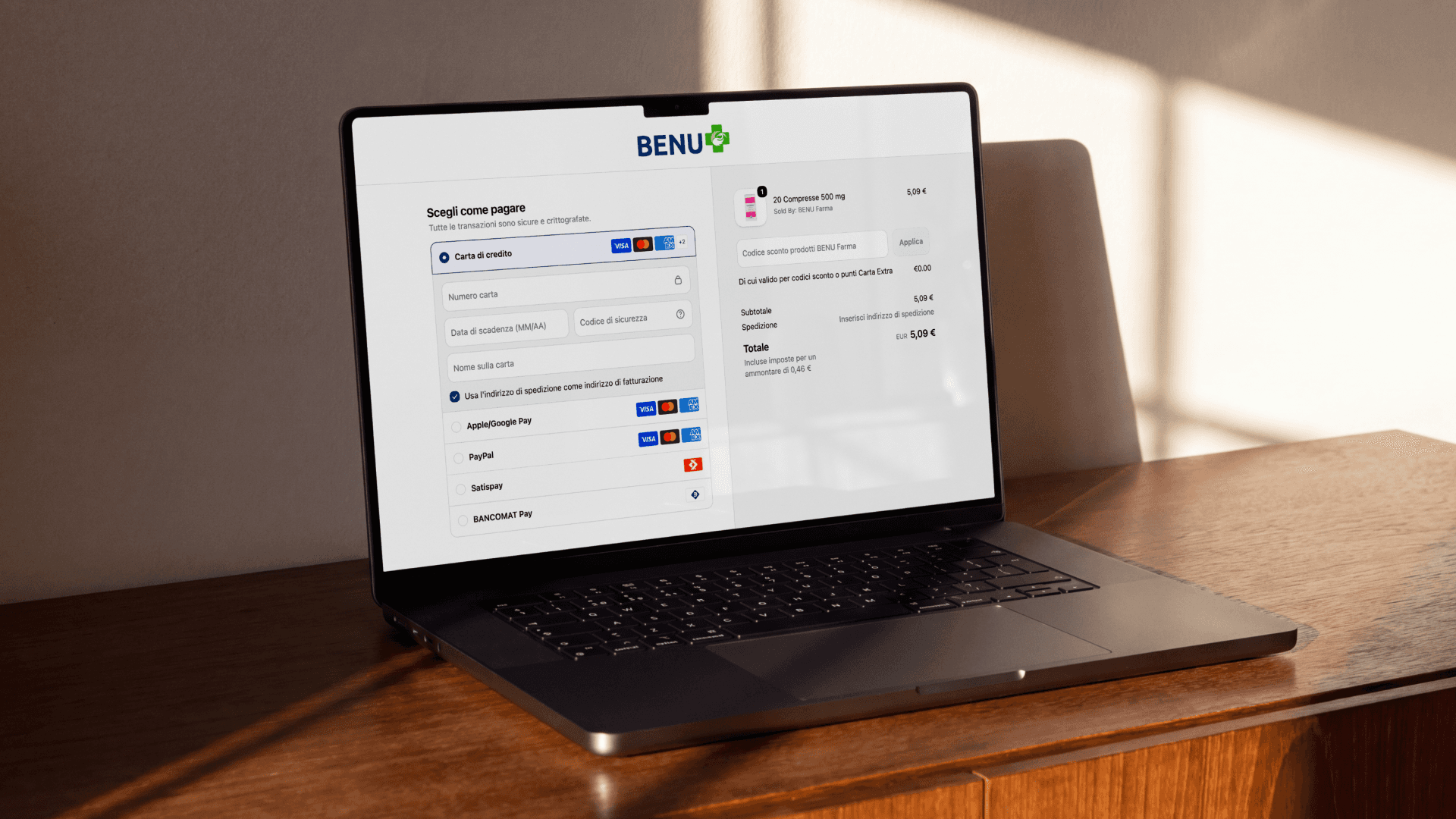
Initially, BENU Farma wanted to use Mollie only for pay-ins, and another provider for pay-outs to third-party sellers. After weighing up cost sustainability and platform compatibility, BENU Farma decided to change strategy and hand the entire operational flow to Mollie.
This centralisation delivered a twofold benefit: it optimised the transaction cost structure – which would otherwise have been penalised by integrating third-party gateways for direct sales – and it unified the way the business is run. Today, the finance department and customer service manage direct, third-party and mixed orders all within a single, centralised operational dashboard.
But what really made the difference was Mollie’s local support, which went beyond just the traditional, ticket-based assistance models of the big foreign players.
“The difference between a supplier and a true partner shows in moments of crisis,” said Diego Fiordi, Head of Marketplace at BENU Farma. “Being able to count on dedicated, local support that speaks Italian makes all the difference. With Mollie, we have a dedicated Customer Success Manager and a local team who respond the same day, guiding our merchants and us every step of the way.”
Delivering that level of day-to-day operational support is at the heart of the work done by Cecilia Bottaro, Customer Success Manager at Mollie:
The solution
Initially, BENU Farma wanted to use Mollie only for pay-ins, and another provider for pay-outs to third-party sellers. After weighing up cost sustainability and platform compatibility, BENU Farma decided to change strategy and hand the entire operational flow to Mollie.
This centralisation delivered a twofold benefit: it optimised the transaction cost structure – which would otherwise have been penalised by integrating third-party gateways for direct sales – and it unified the way the business is run. Today, the finance department and customer service manage direct, third-party and mixed orders all within a single, centralised operational dashboard.
But what really made the difference was Mollie’s local support, which went beyond just the traditional, ticket-based assistance models of the big foreign players.
“The difference between a supplier and a true partner shows in moments of crisis,” said Diego Fiordi, Head of Marketplace at BENU Farma. “Being able to count on dedicated, local support that speaks Italian makes all the difference. With Mollie, we have a dedicated Customer Success Manager and a local team who respond the same day, guiding our merchants and us every step of the way.”
Delivering that level of day-to-day operational support is at the heart of the work done by Cecilia Bottaro, Customer Success Manager at Mollie:
The solution
Initially, BENU Farma wanted to use Mollie only for pay-ins, and another provider for pay-outs to third-party sellers. After weighing up cost sustainability and platform compatibility, BENU Farma decided to change strategy and hand the entire operational flow to Mollie.
This centralisation delivered a twofold benefit: it optimised the transaction cost structure – which would otherwise have been penalised by integrating third-party gateways for direct sales – and it unified the way the business is run. Today, the finance department and customer service manage direct, third-party and mixed orders all within a single, centralised operational dashboard.
But what really made the difference was Mollie’s local support, which went beyond just the traditional, ticket-based assistance models of the big foreign players.
“The difference between a supplier and a true partner shows in moments of crisis,” said Diego Fiordi, Head of Marketplace at BENU Farma. “Being able to count on dedicated, local support that speaks Italian makes all the difference. With Mollie, we have a dedicated Customer Success Manager and a local team who respond the same day, guiding our merchants and us every step of the way.”
Delivering that level of day-to-day operational support is at the heart of the work done by Cecilia Bottaro, Customer Success Manager at Mollie:
Receive updates in your mailbox
Sign up for our Newsletter and learn more about Mollie.
By clicking "Sign up" you confirm to opt-in for Newsletters by Mollie.
“Running a hybrid ecosystem means every operational hiccup can affect both the end customer and third-party sellers. Offering a single point of contact in Italy, with support in Italian, means BENU Farma knows exactly who to talk to in order to resolve an accounting query or unblock a transaction – keeping the whole network running smoothly.”
Cecilia Bottaro, Customer Success Manager at Mollie
The results
Six months after the marketplace went live, the strategy is taking effect.
The numbers so far:
100 sellers live and onboarded in the first six months, against a first-year target of roughly 150.
36,000 third-party offers now listed on the site, in categories the pharmacies could never stock.
KYC in 2 working days. Compliance checks typically take three to 10 working days and become the bottleneck in seller activation. Here they’re the fastest stage of the process.
More than 35 payment methods available to every seller on the marketplace, with no integration work on their side.
Third-party share doubling. Against a 3% target for third-party sales as a share of the digital channel in year one, projections now point to 6% next year.
Bringing a seller onto the marketplace is a long journey: scouting, commercial negotiation, then technical onboarding, which runs two to four weeks. Compliance is usually where that timeline stretches. Taking it down to two working days removes the step most likely to stall a seller before they've sold anything.
The results
Six months after the marketplace went live, the strategy is taking effect.
The numbers so far:
100 sellers live and onboarded in the first six months, against a first-year target of roughly 150.
36,000 third-party offers now listed on the site, in categories the pharmacies could never stock.
KYC in 2 working days. Compliance checks typically take three to 10 working days and become the bottleneck in seller activation. Here they’re the fastest stage of the process.
More than 35 payment methods available to every seller on the marketplace, with no integration work on their side.
Third-party share doubling. Against a 3% target for third-party sales as a share of the digital channel in year one, projections now point to 6% next year.
Bringing a seller onto the marketplace is a long journey: scouting, commercial negotiation, then technical onboarding, which runs two to four weeks. Compliance is usually where that timeline stretches. Taking it down to two working days removes the step most likely to stall a seller before they've sold anything.
The results
Six months after the marketplace went live, the strategy is taking effect.
The numbers so far:
100 sellers live and onboarded in the first six months, against a first-year target of roughly 150.
36,000 third-party offers now listed on the site, in categories the pharmacies could never stock.
KYC in 2 working days. Compliance checks typically take three to 10 working days and become the bottleneck in seller activation. Here they’re the fastest stage of the process.
More than 35 payment methods available to every seller on the marketplace, with no integration work on their side.
Third-party share doubling. Against a 3% target for third-party sales as a share of the digital channel in year one, projections now point to 6% next year.
Bringing a seller onto the marketplace is a long journey: scouting, commercial negotiation, then technical onboarding, which runs two to four weeks. Compliance is usually where that timeline stretches. Taking it down to two working days removes the step most likely to stall a seller before they've sold anything.
“In a marketplace, how quickly you can activate a seller is the whole game. KYC with Mollie is the easiest stage of the journey. It's taken weeks out of our onboarding, and it's why we're ahead of where we expected to be.”
Diego Fiordi, Head of Marketplace at BENU Farma
Looking forward to the future
The online marketplace is the first step in a broader plan to connect the digital catalogue to the shop floor.
The idea is straightforward: a customer standing in a BENU Farma pharmacy should be able to buy anything the marketplace sells, not just what's on the shelves behind the counter. Interactive kiosks and in-store screens would let them browse and order bulky or out-of-stock items themselves, or with a pharmacist's help. The stockroom stops being the limit of what the shop can sell, while the pharmacist's advice stays part of the purchase.
Taking payment is the part that has to work. With Tap to Pay and payment links on the devices staff already carry, the transaction happens wherever the conversation happens, rather than sending the customer back to a till.
Looking forward to the future
The online marketplace is the first step in a broader plan to connect the digital catalogue to the shop floor.
The idea is straightforward: a customer standing in a BENU Farma pharmacy should be able to buy anything the marketplace sells, not just what's on the shelves behind the counter. Interactive kiosks and in-store screens would let them browse and order bulky or out-of-stock items themselves, or with a pharmacist's help. The stockroom stops being the limit of what the shop can sell, while the pharmacist's advice stays part of the purchase.
Taking payment is the part that has to work. With Tap to Pay and payment links on the devices staff already carry, the transaction happens wherever the conversation happens, rather than sending the customer back to a till.
Looking forward to the future
The online marketplace is the first step in a broader plan to connect the digital catalogue to the shop floor.
The idea is straightforward: a customer standing in a BENU Farma pharmacy should be able to buy anything the marketplace sells, not just what's on the shelves behind the counter. Interactive kiosks and in-store screens would let them browse and order bulky or out-of-stock items themselves, or with a pharmacist's help. The stockroom stops being the limit of what the shop can sell, while the pharmacist's advice stays part of the purchase.
Taking payment is the part that has to work. With Tap to Pay and payment links on the devices staff already carry, the transaction happens wherever the conversation happens, rather than sending the customer back to a till.
“We want to put interactive kiosks and screens in our pharmacies so a customer can order a bulky or out-of-stock item themselves, or with the pharmacist's help. With Tap to Pay and payment links, taking the payment on the shop floor becomes straightforward. Mollie is the financial layer that makes that possible.”
Diego Fiordi, Head of Marketplace at BENU Farma
Ready to open your shelves?
If you're building a marketplace, you shouldn't need one provider for pay-ins, another for pay-outs, and a third for compliance. Handle every flow, onboard every seller, and pay everyone correctly from a single platform.
Learn more about Mollie for Marketplaces
Ready to open your shelves?
If you're building a marketplace, you shouldn't need one provider for pay-ins, another for pay-outs, and a third for compliance. Handle every flow, onboard every seller, and pay everyone correctly from a single platform.
Learn more about Mollie for Marketplaces
Ready to open your shelves?
If you're building a marketplace, you shouldn't need one provider for pay-ins, another for pay-outs, and a third for compliance. Handle every flow, onboard every seller, and pay everyone correctly from a single platform.
Learn more about Mollie for Marketplaces
Stay up to date
Never miss an update. Receive product updates, news and customer stories right into your inbox.
Connect every payment. Upgrade every part of your business.
Never miss an update. Receive product updates, news and customer stories right into your inbox.
More stories:
How Dieti Natura upgraded its checkout for a 95.45% acceptance rate
From a checkout that sent customers to a blank page, to a 95.45% acceptance rate – Dieti Natura modernised its payment stack with Mollie Checkout and built a foundation for European growth.
Vitaminstore and Mollie are building the future of omnichannel retail together
Health retailer Vitaminstore partners with Mollie to streamline payments, reduce complexity, and deliver a seamless omnichannel customer experience.
WONDR wins Mollie Newcomer Retail Award as most innovative scale-up
WONDR, the Belgian brand developing and producing plastic-free beauty products, was awarded the Newcomer Retail Award during the Mollie Retailer of the Year Awards 2025.
Simplify payments and money management
Drive revenue, reduce costs, and manage funds with Mollie.
Simplify payments and money management
Drive revenue, reduce costs, and manage funds with Mollie.
Simplify payments and money management
Drive revenue, reduce costs, and manage funds with Mollie.
Simplify payments and money management
Whether you want to grow internationally or focus on a specific market, everything is possible. Mollie supports all known payment methods, so you can grow your business regardless of location.